

Written by César Ruíz «Scheitan» & Juan Carlos López Aguilar.
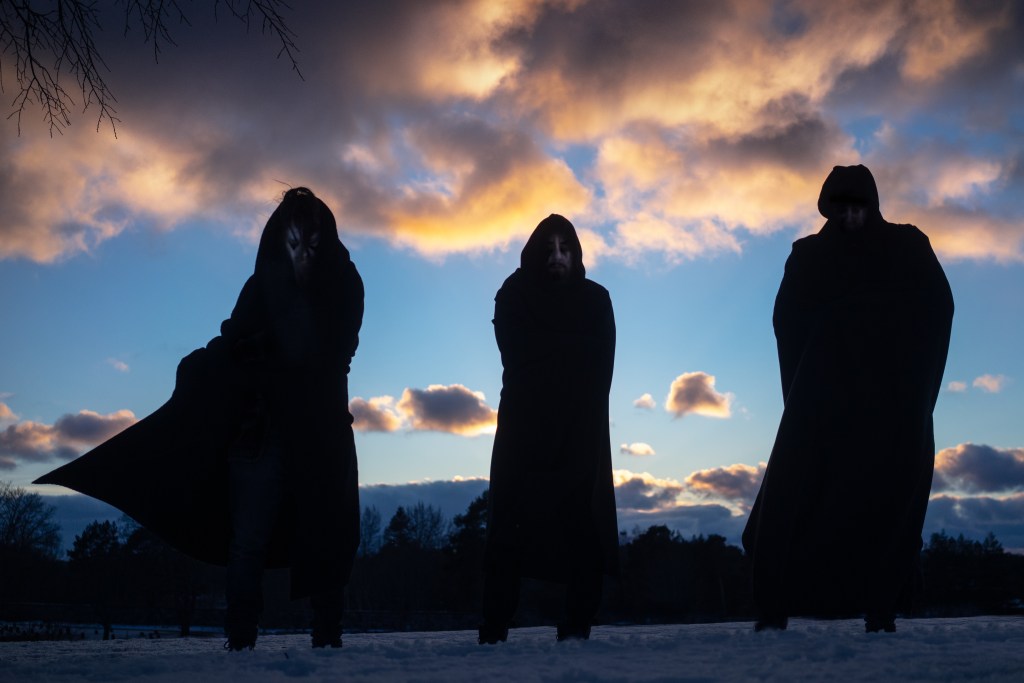
Today we have the immense pleasure and the magnificent opportunity that MÖRK GRYNING, a classic Swedish Black Metal band forged in the golden years of the genre, still continues to fight today and offer high quality creations that will undoubtedly become eternal. From REA we want to pay homage to their 30-year career, and they have kindly agreed to ask us some questions about their past, present and future.
REA-Welcome to REA, make yourself comfortable and allow us to greatly appreciate your attention. happy 30!
Thanks.
REA – Before reviewing your career, tell us what you are doing right now, situate Mörk Gryning today and each of its members.
We are finalizing the songs for the next album. We have around 13 tracks now that we need to rehearse and make pre-productions of. Then we’ll either choose 10 of those for the studio, or we record them all and choose afterwards. It’s a bit different from how we normally work, we’ve hardly ever discarded any songs before but this time more members are involved which generates more material. Also, we have a three date trip to US in April and some other gigs in Scandinavia so we’re rehearsing for that simultaneously. It’s fun having a lot going on. The members of the band today all played with us back in the days. Stoach on guitar was in the line up 2002-2003, C-G (drums) was our drummer after “Pieces of primal expressionism” and played and co-wrote “Mörk Gryning”. Aeon (keys) was already in the band on “Pieces…” until “Mörk Gryning”. Avathar is not an active member at the moment, he took a pause a year ago due to lack of time. He’s still in the circle but Stoach is our main guitarist now, alongside Kimera.
REA- Let’s start at the beginning. After a couple of demos, your first full length, «Tusen år har gått…», directly elevated the band to the top. Today it continues to be appreciated by many as a timeless work, with full force. Over the years, what do its creators think of this work? How do you feel from the distance imposed by time?
Actually we just did one demo. We had recorded a song before but it was never released, and sent out a tape called “Promo 95” or something but that was an advance tape of “Tusen…”. I think “Tusen…” has aged very well. I love that album and it still sounds fresh to me. Also it’s very dynamic with a lot of weird parts, acoustic guitars etc. This is something we wanted to bring back on “Hinsides Vrede” and we’re working with that on the new album as well.
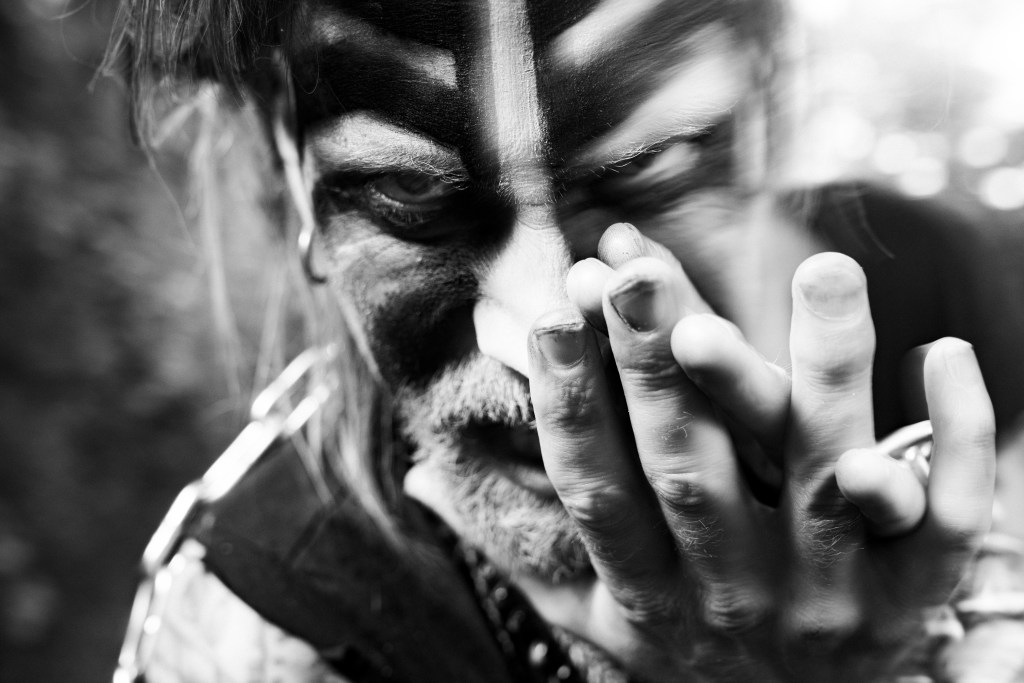
REA- Although MÖRK GRYNING is undoubtedly a cult band within Black Metal today, I have the impression that you may have been somewhat eclipsed by other contemporary bands with more names, so you have not received the corresponding attention. Has this position of less media presence helped to forge your personality over the years? Have you felt comfortable in it?
Mörk Gryning was a project in the beginning, meaning we didn’t do much gigging the first couple of years, when we had a momentum concerning fans and sales. Our main focus was on other bands we played in. On top of that, we changed our style a lot between each album and always refused to compromise so taking that into account, it’s not so strange other bands took off more than we did. However, I feel today that might be a good thing for us cause that gives us a special integrity. Today we do go back to the earlier days in the style, but it’s still just the way we want it. We did experiment a lot on those albums after “Tusen…” and today we’re still developing, but in a subtler way, not the huge jumps we did between “Maelstrom Chaos” and “Pieces…” for example.
REA-MÖRK GRYNING, as survivors of the Black of the 90s, when even then you represented a break with the blacker norm of the moment, for navigating between melodic and dark Black Metal and other bands that offered a more innovative version of Black Metal. How was it? to be in that no man’s land during that explosion of overflowing creativity and unleashed passions?
Good question. To me, a genre of music is only relevant the first few years. That’s when the most creative people are part of it because it’s something new, fresh and vibrant. Just look at the ‘77 Punk scene. Tons of bands came out up until ‘79, but after that it faded away, or became Post Punk or Post Rock. Black Metal, for me, lasted 1992/93 until 1995/96. After that, there had been so many great albums released that it wasn’t really possible to top those.
REA – How do you remember years between 2001 and 2004 with the releases of «Maelstorm…» and «Pieces…». Risky albums in addition to line-up changes?
“Maelstrom…” I wouldn’t say was risky, it was sort of looking back at “Tusen…” and that album was the one that got us out on the road finally, and turned us into a “real” band, and not just a project. So little by little we started gigging but it wasn’t until after “Pieces..” that we truly had a fixed line up. Up until then, I think we had had around 20 different session musicians but after that we stuck to the same crew. It was a blast really, we were good friends and we had loads of fun. Now, “Pieces…” definitely was risky as you say and it alienated a lot of people but I’m still proud of it.
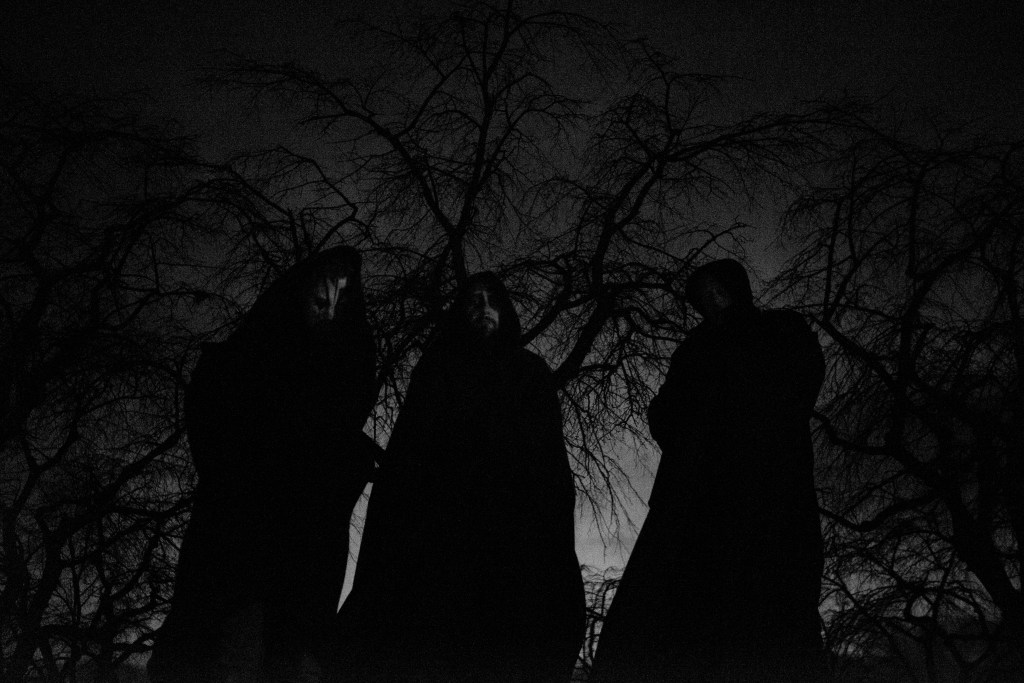
REA- We reached a critical moment in your career, 2005. At that moment you developed a spectacular self-titled album, which is considered a masterpiece and not only within your discography. How was it born in your heads, because your works are always personal? and part of yourselves?
That was the only album (up until the new one we’re working on now) we wrote and rehearsed as a band, or at least ⅔ of it. We were gigging and rehearsing regularly so we were a tight knit unit and everyone was contributing. Kimera wasn’t in the band at this time and the vocals were handled by Johan Ljung who was phenomenal as well. He wrote almost all the lyrics for that album which is very different from before, where normally I would write for my songs and Kimera for his. It’s important to understand that the album is divided. We had recorded a four track demo but after that, my inspiration vanished and I split up the band. But finally we decided to release it so I did three more songs and then we added the At The Gates cover “Neverwhere” (and I’m happy we did, I think we did a good job on that one), as well as a live version of “Aurora”. The three songs I did are quite different from the ones we did together, they’re simpler, more straight forward, so I guess you will either prefer those or the others, depending on your taste.
REA- There are 10 years between «Tusen år har gått» and «Mörk Gryning». Somehow, during that time you emptied yourself by putting a lot of yourselves into your jobs. It must be difficult to work in this way, creating conceptual works made up of albums and not individual songs, gathered in a format that brings them together. What was the compositional process during this time?
For me, writing music for an album is always easier than just writing a song that doesn’t have a purpose yet. I need a frame and a deadline, that gets me going and once the inspiration comes, it pours. I have to be careful, if not I’m consumed by it. I find smoking weed helps to come down, as well as get inspiration and listen to the songs in a different way, in a deeper way. It’s not like I’m stoned all the time, but after I spent a few hours playing/writing/recording I use to light up a spliff and listen from the top. If it’s all good then, normally the song is ready, if not I might get up and keep working, or just make a memo of my thoughts and go back to it later. Often I work on many songs at the same time so when inspiration fades for one song, it might blossom for another. The most intense process was for “Hinsides…” where we wrote most of it in three weeks. During those days I did a lot of shamanic rituals and meditation. Another technique I use is that of Hemmingway, to stop before you’re done, so you know where to begin the next day.
REA- Continuing with Mörk Gryning, one concern I have is why a self-titled album at this precise moment?
I don’t remember exactly why we chose that title (or not to have a title), but I guess it made sense as a conclusion of our career. It was very hard to stop the band because we all enjoyed it so much, but for me I had to go on musically as well as personally and I knew if I’d kept Mörk Gryning going, I would have stayed in that comfort zone.
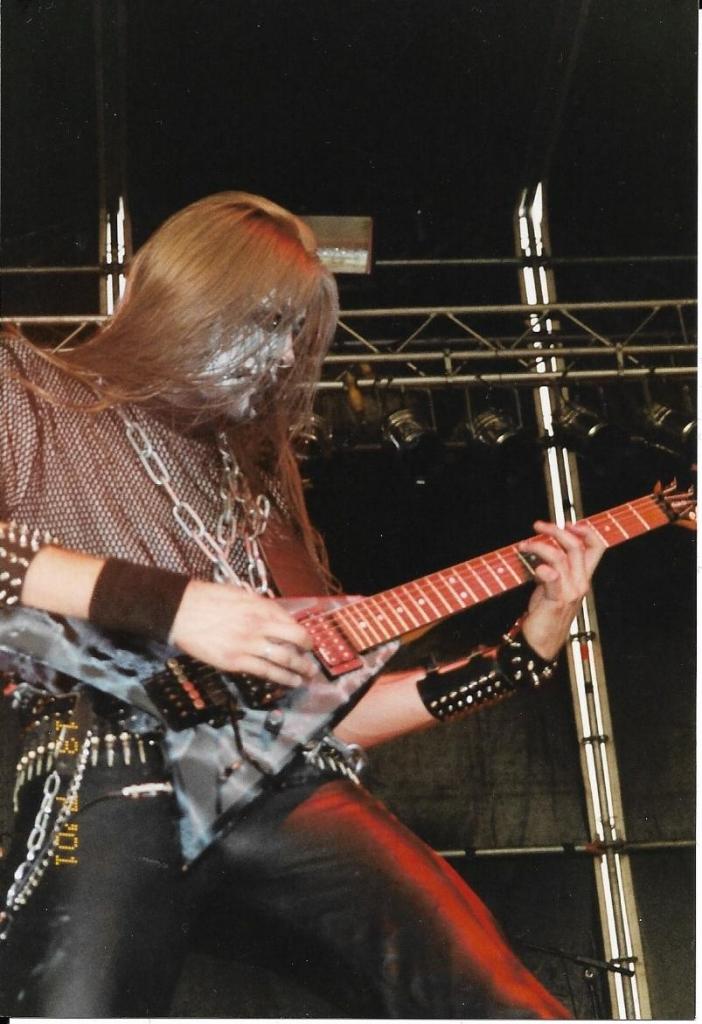
REA- I know this is something you’ve been asked a thousand times, but it’s hard to think of an interview with MÖRK GRYNING without touching on the 15-year gap between «Mörk Gryning» and «Hinsides vrede». I understand that there comes a time when if you want to be honest, you need to stop until you find the right moment to continue. What was it that made you stop?
I mentioned earlier that already in ‘96 I felt “all had been done” more or less. After that I didn’t listen much to Black or Death Metal, I was into 80’ies metal and kept snooping around second hand record stores for vinyls. Starting with the stuff I listened to before, like Judas Priest, Kreator, Slayer, Helloween, Accept etc, and then I kept finding more and more obscure bands. But I still enjoyed listening to the old classic BM-albums and still enjoyed playing the music, so that’s why I didn’t quit already after “Return Fire”. But when I had discovered a zillion metal bands, I started looking elsewhere, going farther back in time, to the 70ies, 60ies and beyond and then at some point I just felt quite detached from what we were doing.
REA-MÖRK GRYNING has built a reputation for not doing much live. However, the return to studio activity is preceded by, precisely, the appearance at a festival with some new songs. Is there a relationship between this participation in this live performance and your return to recording? Did you in any way promote the creation of «Hinsides vrede»?
Yes, the gigs were the spark that led to “Hinsides…”. Initially it was just about this one gig at Party San, but then we got an offer for another, and after that we decided to make a new album. It was just a fucking blast and it was an honour to see that people still remembered us. We did 3-4 for shows before “Hinsides…” was released, but the idea was to tour and promote it properly. Had it not been for a worldwide pandemic, that is.
REA- Be that as it may, we are pleased that you have returned to your creative activity, because we enjoyed it enormously, but what state of mind or what internal factors move you to embark on this challenge, re-editing a long duration that returns to you? put on the current black metal map?
Mörk Gryning never left me completely. There were always some ideas from time to time, or just a wish to play live with the band. I’ve played many other styles of music but you never get that same feeling as you do doing a black metal show. The energy is so intense, the crowd is so into the music, it’s furious and aggressive but also deep and sometimes beautiful. I think that combination just creates a phenomenal state.
REA- Remembering again «Tusen år har gått», it is a thematic album in which western religion and the omnipresent figure, in Black Metal, of Satan, are highly present. On your latest album, Hinsides vrede, the lyrics don’t revolve so much around these themes. They seem more open to more global, more human issues, as if to say more earthly and tangible. Of course, there are many years that separate the two works, but what has changed in you and what has caused this conceptual evolution and surely in some way, also vital?
For me it’s always essential that the lyrics are in a way “real”, that they represent something actual. Even on “Tusen…”, which is a pure fantasy album, I truly believed judgment day was coming. But I didn’t wanna write “America’s gonna invade Iraq”, “Putin’s gonna storm Ukraine”. Like Euronymous said, you can’t have lyrics about society in Black Metal. It doesn’t work, that’s not the atmosphere. But to be fair, I WAS a huge fantasy and horror fan, Tolkien, Lovecraft, Poe etc. And satanic films like Omen, The Exorcist and Hellraiser. I guess the difference today is that the lyrics might be a bit more vague and poetic, but I usually have a quite clear idea of what they’re about.
REA- Your latest installment, Hinsides vrede, was edited during the pandemic. Can you discover something of everything that happened and you felt during that period, in this work?
Well, I wasn’t around at the time. I was living in Berlin so I wouldn’t have been in the studio anyway. Sverker would send us some mixes at the time and we would come with our opinions.
REA- Personally, Hinsides vrede, I find it a very interesting work that somehow seems to close a circle on itself, with a dark and slow intro with voices typical of religious songs, in the background, which precedes Fältherren a fast and rabid subject. Finally, and after Black Spirit, a theme that grows in intensity and that recalls other times, On the Elysian Fields is a piano study that seems to return things to the place they began, providing an ending that is announced with this theme. What is behind this arrangement of topics within the whole that is «Hinsides vrede»?
We wanted to make a simple, straight forward, but still dynamic album. Back to the roots but something new also. The piano pieces are a different side to the same coin to me, the sadness and emptiness that follows rage.
REA- Currently there are a large number of bands that make black metal in all corners of the world. Many of them evoking the Scandinavian classics of the 90s, where you started. How do you see the current panorama within black metal? Are there any or some bands that you can highlight as having impacted you or at least interested you especially?
We’ve come across some decent bands, from Sweden I enjoy Wormwood, Mephorash and Tribulation for example. I also think bands like Wolves in the Throne Room and Imperial Triumphant are cool, I like bands that go outside the box a bit.
REA- Since Hinsides vrede was released, three years have passed. Do you have any compositional project underway?
Yes, so we’re entering the studio in May. It will be Wing Studios again with Sverker Widgren. We know each other since 20 years and it’s super easy to work with him. The songs will be a bit more complex than on “Hinsides…” but still rather straight forward. Also there will be more clean vocals and acoustic guitars.
REA- Although it seems that the war poses some difficulties for movement in the north, are there plans to tour Europe, to continue sharing Hinsides vrede in the near future? Do you want to come to Spain?
I don’t know if the war poses difficulties to travel in Europe but the gas prices has gone up as well as the cost for nightliners. But I really hope we can go play more in Europe soon, lately we’ve been getting more offers across the atlantic. The market is a bit saturated after the pandemic I guess, every band is out there. If you get us some gigs in Spain, we’ll come any day!
REA- It only remains for me to thank you for your kind attention and the time you have dedicated to us and offer you the possibility of speaking freely to the Spanish public. From those who have followed you for years to those who have been able to discover you in this humble interview.
Thanks a lot for the interview! We’d love to go to Spain, just let us know if you can book us some shows. Hasta pronto!

 Rock Entre Amigos