
Por Scheitan
VERSIÓN EN CASTELLANO (SPANISH VERSION)
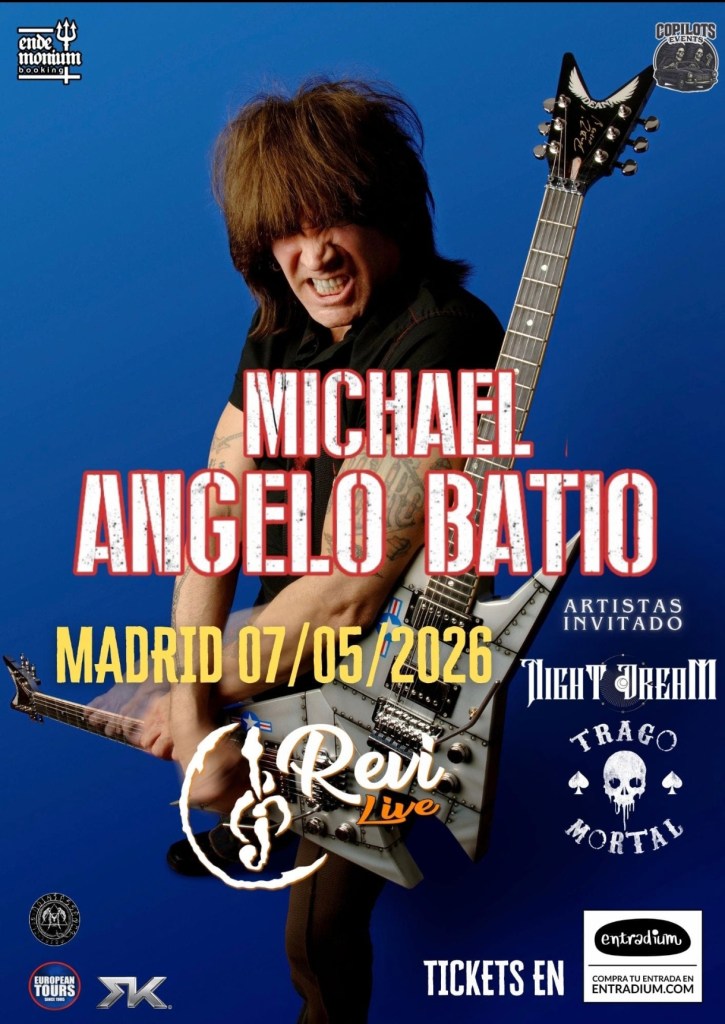
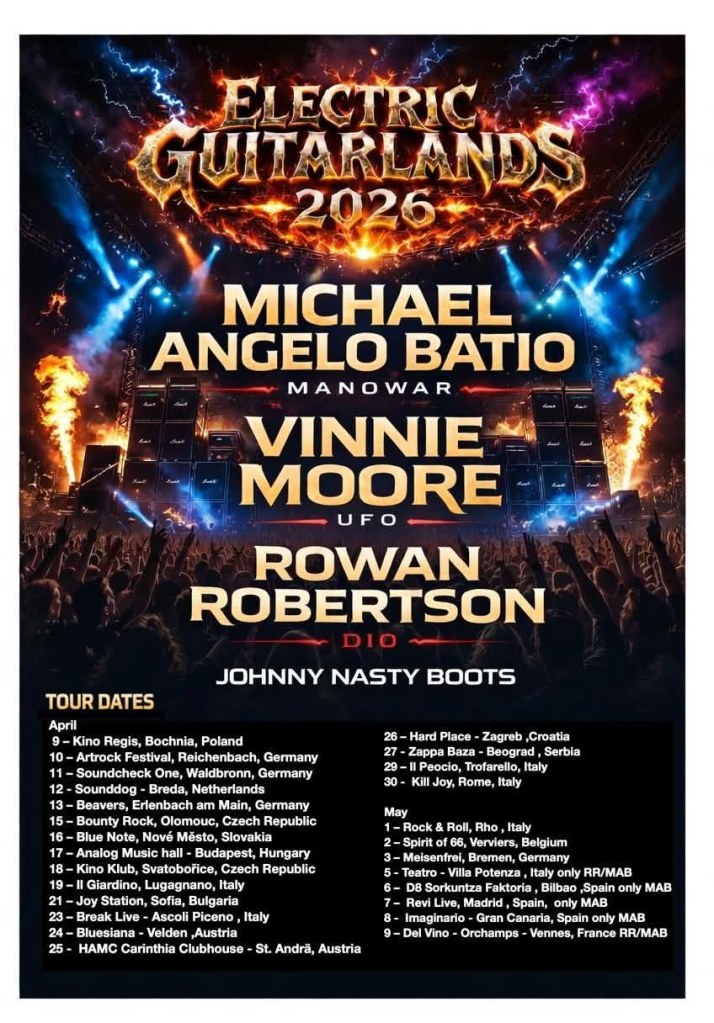
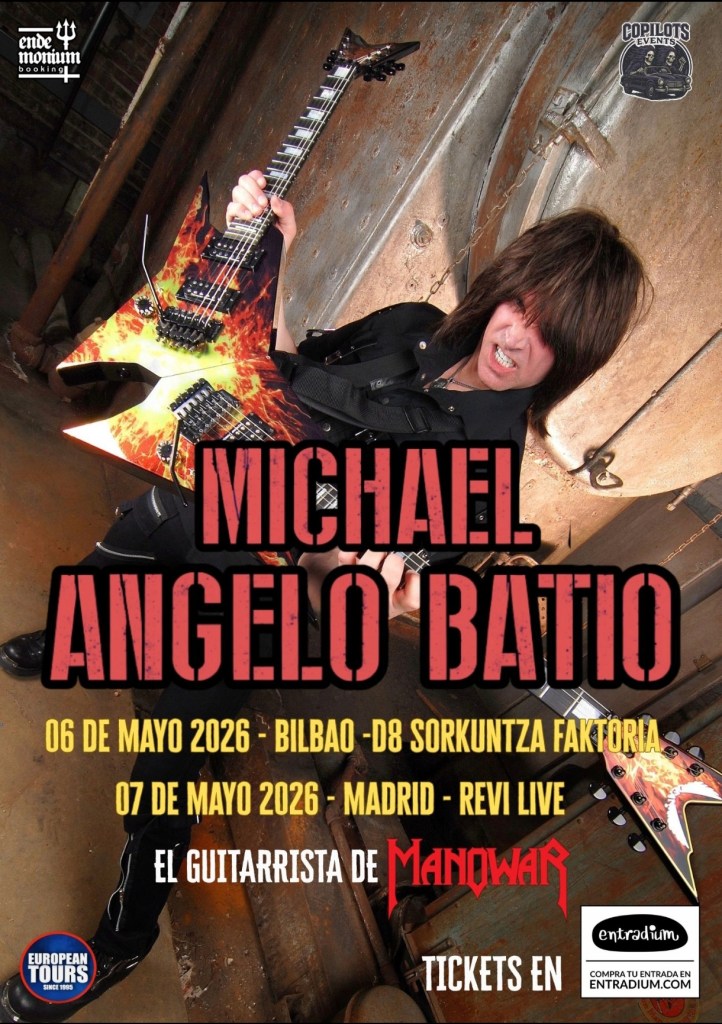
Si hay un nombre que define el concepto de «guitar hero» llevado al extremo absoluto, es Michael Angelo Batio. Inventor de la mítica Double Guitar, pionero del shred más rápido del planeta y poseedor de una técnica ambidiestra que desafía la lógica, Michael ha pasado de ser el rey de los vídeos instructivos en los 90 a convertirse en el actual guardián de las seis cuerdas para los poderosos MANOWAR. Tras una reciente visita relámpago a España en febrero, donde quedó cautivado por el acero de Toledo, el maestro regresa este mayo con su gira Electric Guitarlands para ofrecer shows exclusivos en Bilbao (6 de mayo), Madrid (7 de mayo) y Gran Canaria (8 de mayo). Nos sentamos con él para repasar una vida dedicada a las seis cuerdas, su nueva era con Joey DeMaio, el mito de Nitro y el secreto para mantener viva la llama de la velocidad a sus casi 70 años.
Bienvenido de nuevo a España, Michael! Vienes con la gira Electric Guitarlands. En el resto de Europa compartes cartel con otros grandes de la guitarra, pero en Bilbao, Madrid y Gran Canaria el formato es «Only MAB». ¿Qué podemos esperar de esta experiencia directa en solitario? Para los shows de «Solo MAB» en Bilbao, Madrid y Gran Canaria, tendréis la experiencia completa sin cortes. Sin otros guitarristas, solo yo, mis guitarras y la música. Esperad una mezcla de mis piezas instrumentales de shred, algunos tributos como Van Halen y otros, y por supuesto la guitarra doble. Es algo crudo, directo y de alta energía.
A finales de febrero visitaste España y vimos que te fascinó Toledo. La llamaste «una de las ciudades más metaleras que existen». ¿Te ha inspirado esa estética medieval de espadas y castillos para escribir algo nuevo? ¡Toledo me voló la cabeza! Ese ambiente medieval con las espadas, los castillos y la historia es puro metal. La arquitectura y la atmósfera definitivamente despertaron algunas ideas. He estado escribiendo nuevas piezas neoclásicas que tienen un sentimiento dramático y épico con ese espíritu guerrero del viejo mundo. Escucharéis algo de esa influencia filtrándose en el material nuevo que estoy desarrollando.
El 7 de mayo tocas en Revi Live en Madrid, una sala muy purista y underground. ¿Prefieres la energía íntima y sudorosa de estos clubes o los escenarios de estadios masivos a los que estás acostumbrado con Manowar? Me encantan ambos, pero la energía íntima de un club en un lugar como Revi Live es especial. No hay nada como esa conexión sudorosa y cercana donde puedes ver las caras de los fans y sentir la sala vibrar. Los estadios con Manowar son masivos y poderosos, pero los clubes me permiten ser más personal con el shred y el espectáculo. ¡Lo de Madrid el 7 de mayo va a ser fuego!
En esta gira ofreces una «Experiencia VIP». ¿Cuál es la pregunta más común que te hacen los fans cuando tienen la oportunidad de examinar tu equipo de cerca? En la Experiencia VIP, a los fans les encanta revisar el equipo de cerca. La pregunta más común es sobre la Guitarra Doble o la mecánica de la Quad: cómo cambio entre mástiles tan rápido o cómo funciona la técnica «over-under». También preguntan mucho sobre mi estilo de púa y el apagador de cuerdas (string dampener).
Hace poco dijiste en tus redes sociales que venir a España es «como volver a casa». ¿Qué tienen los metaleros españoles que te hace sentir tan cómodo? Los metaleros españoles son apasionados, leales y viven la música con toda su alma. La energía en los shows aquí es increíble: cantan cada nota, hacen headbanging como guerreros y te tratan como a la familia. Realmente se siente como volver a casa. El respeto por el arte de la guitarra y el heavy metal es muy profundo aquí.
Tu entrada en Manowar a finales de 2022 fue una auténtica bomba. ¿Cómo fue aquel primer encuentro con Joey DeMaio y cuándo supiste que serías el nuevo guitarrista de los «Kings of Metal»? Unirme a Manowar fue un sueño hecho realidad. La primera reunión con Joey DeMaio fue intensa y directa al grano. Es un verdadero visionario y una bestia al bajo. Conectamos de inmediato en la visión de la banda. Supe bastante rápido que este era mi lugar; aportar el elemento shred a los «Kings of Metal» se sintió bien desde el primer día.
Tu estilo se basa en el virtuosismo neoclásico, mientras que Manowar es puro poder y heavy metal épico. ¿Fue difícil encontrar el equilibrio para que el «toque MAB» encajara en los himnos de la banda? No fue difícil en absoluto porque crecí amando el heavy metal épico. Mi estilo neoclásico añade una nueva capa de virtuosismo a los himnos sin perder esa potencia bruta. Joey y la banda me dieron libertad para aportar el «toque MAB» —pasajes rápidos, armonías y estilo— manteniéndome fiel al espíritu de Manowar. Es un equilibrio poderoso.
Joey DeMaio es conocido por ser muy estricto con el tono masivo y atronador. ¿Tuviste que modificar tu equipo habitual, pedales o pastillas para cumplir con el «estándar Manowar»? Joey es un perfeccionista con el tono, y respeto eso al 100%. Hice algunos ajustes en mi equipo para conseguir ese sonido masivo y aplastante de Manowar: amplificadores más grandes, pastillas específicas para tener más pegada en graves y ajustar bien los pedales. Pero la base de mi configuración se mantuvo fiel. ¡Tenía que ser atronador y enorme!
En 2025 diste un concierto multitudinario en España. ¿Qué se siente al ver a miles de personas coreando himnos de guerra mientras ejecutas tus solos? Ver a miles de personas coreando esos himnos de guerra mientras estoy ahí arriba tocando es un subidón de adrenalina sin igual. Te empodera. Te sientes parte de un ejército del metal, y la energía se retroalimenta directamente en tu forma de tocar. Lo de España en 2025 fue inolvidable.
Sabemos que has estado en el estudio con la banda. ¿Cómo describirías el nuevo material de Manowar en el que estáis trabajando actualmente? El nuevo material es épico, poderoso y tiene esa grandeza clásica de Manowar pero con un fuego renovado. Hay un trabajo de guitarra brutal: grandes riffs, solos voladores y mucha dinámica. Estoy emocionado de que el mundo lo escuche. ¡Va a machacar!
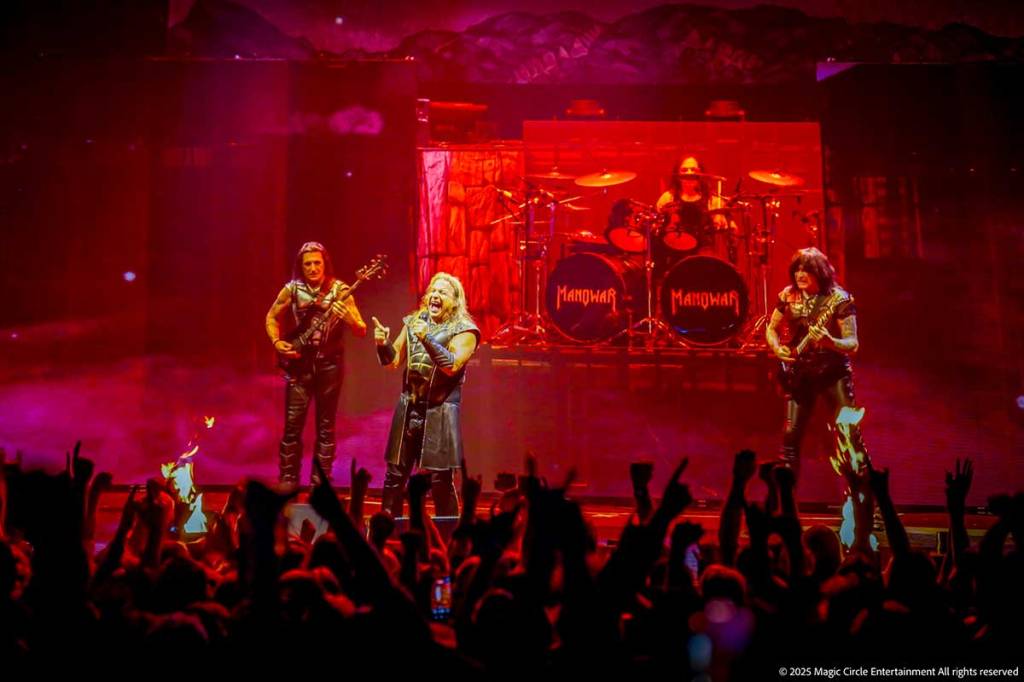
La revista Guitar World publicó recientemente un extenso reportaje sobre tu carrera. Al leerlo, ¿sientes que la industria reconoce por fin tu valor como innovador e inventor, y no solo como el «guitarrista más rápido»? El reportaje de Guitar World fue increíble. Sí, siento que la industria finalmente está viendo la imagen completa: no solo la velocidad, sino la innovación, la enseñanza, la composición y los inventos de equipo. Es una validación después de tantos años.
Mucha gente no sabe que eres licenciado en Teoría Musical. ¿Cuánto te ayuda esa formación académica a la hora de estructurar solos a velocidades de vértigo? Mi licenciatura en teoría musical es fundamental. Me ayuda a estructurar los solos como composiciones; conocer las escalas, los modos, el contrapunto y la armonía a fondo significa que, incluso a velocidades de vértigo, todo tiene un propósito musical y una resolución. Es lo que separa el shred sin sentido de la música con significado.
Fuiste pionero con el «MAB String Dampener». Hoy en día, casi todos los guitarristas de metal moderno usan fretwraps. ¿Te consideras un visionario en cuanto a accesorios para guitarra? Estoy orgulloso del apagador de cuerdas MAB. Ver «fretwraps» por todas partes ahora se siente genial. Estaba pensando de forma práctica en silenciar las cuerdas para tocar limpio a altas velocidades, y funcionó. ¿Visionario? Dejaré que los músicos lo decidan, pero estoy feliz de que ayude a tantos guitarristas.
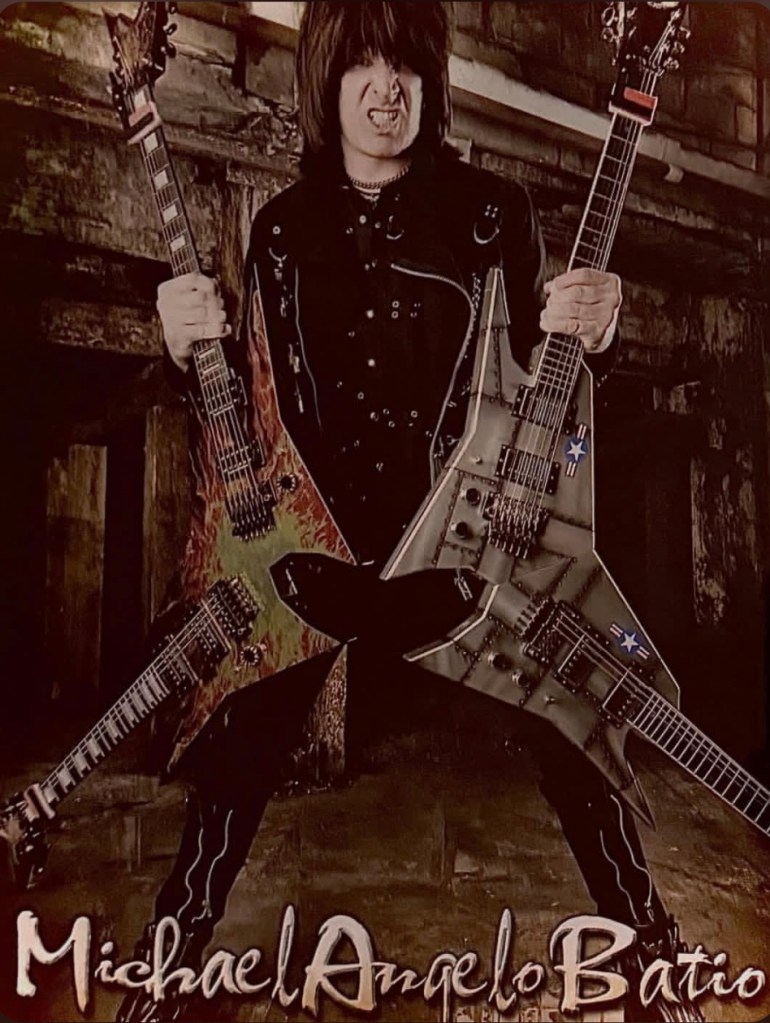
La Double Guitar: tocar dos armonías diferentes a la vez es un gran reto mental. ¿Cómo «entrenas» tu cerebro para que cada mano actúe de forma independiente? La Guitarra Doble es cuestión de independencia y práctica. Entrené mi cerebro como un pianista: años de ejercicios de contrapunto, tocando líneas diferentes con cada mano y creando memoria muscular. Es disciplina mental más miles de horas. Ahora se siente natural.
Eres el maestro de la púa alterna estricta. Con el auge actual del economy picking y el edge slanting, ¿sigues creyendo que la púa alterna es la mejor forma de transmitir la pura agresión del Heavy Metal? La púa alterna estricta sigue siendo la reina para ese ataque de heavy metal puro y agresivo. El economy picking y el slanting tienen su lugar, pero para el empuje implacable y la precisión en el metal, la púa alterna es la que entrega el fuego. Me mantengo en ello.
Tocar como tú requiere la disciplina de un atleta olímpico. ¿Qué rutina de calentamiento sigues para mantener tus articulaciones sanas tras tantos años de gira? Lo trato como un atleta: calentamientos con estiramientos, ejercicios cromáticos a velocidades lentas aumentando gradualmente, ejercicios de independencia de dedos y enfriamiento. La consistencia, la técnica adecuada y escuchar a mi cuerpo me han mantenido fuerte después de décadas.
¿Qué opinas de la nueva ola de «guitarristas de Instagram» que tocan sweeps increíblemente complejos pero quizás se centran menos en la composición real? La nueva ola es impresionante técnicamente, pero siempre recalco la composición y el sentimiento. Los sweeps complejos están guays, pero si no sirven a una canción o no emocionan a la gente, es solo gimnasia. Los grandes músicos combinan la técnica con la emoción y la composición.
Tus vídeos instructivos Speed Kills son legendarios. ¿Imaginaste alguna vez que esas cintas VHS se convertirían en fenómenos de culto de la cultura pop de internet para millones de guitarristas? ¡Ni en mis sueños más salvajes! Esos vídeos de Speed Kills se hicieron para enseñar, y ahora son clásicos de culto en internet. Es una lección de humildad ver a generaciones de guitarristas descubriéndolos.
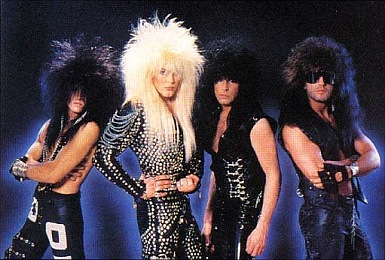
Viajemos a 1989. Nitro y el álbum O.F.R. Fue el extremo definitivo. ¿Crees que Nitro fue la culminación absoluta de una era de excesos en el rock de Hollywood? Nitro y el álbum O.F.R. fueron la cima de esa era de excesos de Hollywood: pelos cardados, guitarras locas, todo exagerado. Fue una época salvaje y fuimos a por el extremo.
La historia del robo de tu Quad Guitar original en El Paso en 1989 forma parte del folclore del metal. ¿Qué sentiste al recuperar partes de ella años después gracias a un fan?Cuando partes de la Quad original regresaron gracias a un fan, fue emocionante. Esa guitarra es parte de la historia del metal. Recuperar las piezas se sintió como cerrar un capítulo de una de las historias más locas de mi carrera.
¿Qué se siente realmente al tocar una guitarra de cuatro mástiles? ¿Fue más un reto de resistencia física o puramente técnico? Tocar la guitarra de cuatro mástiles es tanto físico como técnico. Es pesada, requiere resistencia, y la técnica «over-under» te derrite el cerebro al principio. Pero una vez que estás en la zona, es pura diversión y espectáculo.
Antes de Nitro, estuviste en Holland y editaste Little Monsters (1985). ¿Qué aprendiste durante aquellos primeros años sobre cómo sobrevivir en la industria musical? En Holland con Little Monsters, aprendí que tienes que ser duro, profesional y fiel a ti mismo. La industria es brutal: desarrolla tus habilidades, haz contactos y nunca dejes de crear.
Muchos críticos en los 90 decían que tu forma de tocar era «solo velocidad y espectáculo», pero el tiempo te ha dado la razón como un gran artista. ¿Qué importancia tiene el aspecto visual de un concierto de Heavy Metal? El aspecto visual es crucial en el heavy metal. ¡Es entretenimiento! Las guitarras, el espectáculo, la energía… todo suma a la experiencia. El tiempo demostró que el paquete completo importa.
En el artículo de Guitar World hablabas de tus encuentros con Yngwie Malmsteen en los 80. ¿Hubo alguna vez una rivalidad real, o siempre fue respeto mutuo entre maestros? Siempre fue respeto mutuo. Yngwie es un maestro. Nos empujamos el uno al otro en esa época, pero era una competición amistosa entre tipos que aman el instrumento.
¿Qué es lo que más echas de menos de la escena metalera de 1989 y qué es lo que más te gusta de la escena actual en 2026?Echo de menos la emoción pura y la creatividad de la escena de los 80: no había reglas, todo era posible. En este 2026, me encanta el alcance global, cómo los fans conectan online y el nuevo talento que mantiene vivo el shred.
¿Cuál fue el primer disco de Rock o Metal que compraste con tu propio dinero? El que te hizo decir: «Quiero hacer esto». El primer disco que compré con mi propio dinero fue algo de Deep Purple o Jimi Hendrix. Escuchar ese fuego en la guitarra me hizo decir: «¡Esto es lo que quiero hacer!».
Si te quedaras varado en una isla desierta y solo pudieras escuchar UN disco por el resto de tu vida, ¿cuál sería? Ride the Lightning de Metallica. Cambió mi vida: equilibrio perfecto entre potencia, melodía y agresión. Podría escucharlo siempre.
Después de recorrer el mundo docenas de veces, ¿qué es lo más loco, divertido o vergonzoso que te ha pasado en el escenario o en la carretera? Ha habido muchos momentos locos, pero uno vergonzoso fue un percance en el escenario al principio de mi carrera, donde se me rompió la correa de la guitarra en pleno shred. ¡Por suerte, al público le encantó cómo me recuperé!
Si pudieras montar una «Dream Jam» con tres músicos (vivos o muertos, excluyendo a tus compañeros de Manowar), ¿a quién elegirías para compartir escenario? Mi jam de ensueño: Jimi Hendrix, Randy Rhoads y Eddie Van Halen. ¡Imaginaos los fuegos artificiales!
¿Algún mensaje final para los lectores de Rock Entre Amigos y para todos los fans españoles que cuentan los días para verte en Bilbao, Madrid y Gran Canaria? A todos los fans españoles y lectores de Rock Entre Amigos: ¡Gracias por vuestro apoyo increíble! Yo también estoy contando los días. Vamos a hacer que estos shows sean legendarios. Traed vuestra energía y celebremos el heavy metal juntos. Nos vemos en Bilbao, Madrid y Gran Canaria. ¡Stay metal!
ENGLISH VERSION
If there is one name that defines the concept of ‘guitar hero’ taken to the absolute extreme, it is Michael Angelo Batio. Inventor of the mythical Double Guitar, pioneer of the fastest shredding on the planet, and possessor of an ambidextrous technique that defies logic, Michael has gone from being the king of instructional videos in the 90s to becoming the current guardian of the six strings for the mighty MANOWAR.
After a recent lightning visit to Spain in February—where he was captivated by the steel of Toledo—the master returns this May with his Electric Guitarlands tour to offer exclusive shows in Bilbao (May 6), Madrid (May 7), and Gran Canaria (May 8). We sat down with him to review a life dedicated to the six strings, his new era with Joey DeMaio, the myth of Nitro, and the secret to keeping the flame of speed intact at almost 70 years old.
- Welcome back to Spain, Michael! You are coming with the Electric Guitarlands tour. In the rest of Europe, you share the bill with other guitar greats, but for your dates in Bilbao, Madrid, and Gran Canaria, the format is «Only MAB». What can we expect from this direct, solo experience?Thank you, it’s great to be back in Spain! For the “Only MAB” shows in Bilbao, Madrid, and Gran Canaria, you get the full uncut experience. No other guitarists, just me, my guitars, and the music. Expect a mix of my instrumental shred pieces, some tributes like Van Halen and others, and of course the double guitar. It’s raw, direct, and high-energy.
- In late February, you visited Spain and we saw you were fascinated by Toledo. You called it «one of the most metal cities that exist». Has that medieval aesthetic of swords and castles inspired you to write anything new?Toledo blew my mind! That medieval vibe with the swords, castles, and history is pure metal. The architecture and atmosphere definitely sparked some ideas. I’ve been writing some new neoclassical pieces that have a dramatic, epic feel with that old-world warrior spirit. You’ll hear some of that influence creeping into the new stuff I’m developing.
- On May 7th, you are playing at Revi Live in Madrid, a very purist, underground venue. Do you prefer the intimate, sweaty energy of these clubs, or the massive stadium stages you are used to with Manowar?I love both, but the intimate club energy at a place like Revi Live is special. There’s nothing like that sweaty, up-close connection where you can see the fans’ faces and feel the room vibrate. Stadiums with Manowar are massive and powerful, but clubs let me get personal with the shred and the showmanship. Madrid on May 7th is going to be fire!
- On this tour, you offer a «VIP Experience». What is the most common question fans ask you when they have the chance to examine your gear up close?In the VIP Experience, fans love checking out the gear up close. The most common question is about the Double Guitar or the mechanics of the Quad—how I switch between necks so fast, or how the over-under technique works. They also ask about my picking style and the string dampener a lot.
- You recently said on your social media that coming to Spain is «like coming home». What is it about the Spanish metalheads that makes you feel so comfortable?Spanish metalheads are passionate, loyal, and they live the music with their whole soul. The energy at shows here is incredible—they sing every note, headbang like warriors, and treat you like family. It really does feel like coming home. The respect for the art of guitar and heavy metal runs deep here.
- Your joining Manowar in late 2022 was a massive bombshell. What was that first meeting with Joey DeMaio like, and when did you know you were going to be the new guitarist for the «Kings of Metal»?Joining Manowar was a dream come true. The first meeting with Joey DeMaio was intense and straight to the point. He’s a true visionary and a beast on bass. We clicked immediately on the vision for the band. I knew pretty quickly that this was where I belonged—bringing the shred element to the Kings of Metal felt right from day one.
- Your style is based on neoclassical virtuosity, while Manowar is pure power and epic heavy metal. Was it difficult to find the balance so that the «MAB touch» fit into the band’s anthems?It wasn’t difficult at all because I grew up loving epic heavy metal. My neoclassical style adds a new layer of virtuosity to the anthems without losing that raw power. Joey and the band gave me the freedom to bring the MAB touch—fast runs, harmonies, and flair—while staying true to the Manowar spirit. It’s a powerful balance.
- Joey DeMaio is notoriously strict about achieving that massive, deafening tone. Did you have to modify your usual rig, pedals, or pickups to meet the «Manowar standard»?Joey is a perfectionist about tone, and I respect that 100%. I made some adjustments to my rig to get that massive, crushing Manowar sound—bigger amps, specific pickups for more low-end punch, and dialing in the right pedals. But the core of my setup stayed true. It had to be deafening and huge!
- In 2025, you played a massive show in Spain. What does it feel like to see thousands of people chanting war anthems while you shred your solos?Seeing thousands of people chanting those war anthems while I’m up there shredding is an adrenaline rush like no other. It’s empowering. You feel like part of a metal army, and the energy feeds right back into your playing. Spain in 2025 was unforgettable.
- We know you’ve been in the studio with the band. How would you describe the new Manowar material you are currently working on?The new material is epic, powerful, and has that classic Manowar grandeur but with fresh fire. There’s some killer guitar work—big riffs, soaring solos, and lots of dynamics. I’m excited for the world to hear it. It’s going to crush!
- Guitar World magazine recently published a massive feature on your career. Reading it, do you feel the industry finally recognizes your value as an innovator and inventor, not just as the «fastest guitarist»?The Guitar World feature was awesome. Yes, I feel like the industry is finally seeing the full picture—not just speed, but the innovation, the teaching, the songwriting, and the gear inventions. It’s validating after all these years.
- Many people don’t know you have a degree in Music Theory. How much does that academic background help you when structuring solos at breakneck speeds?My music theory degree is huge. It helps me structure solos like compositions—knowing scales, modes, counterpoint, and harmony inside out means even at breakneck speeds, everything has musical purpose and resolution. It’s what separates mindless shred from meaningful music.
- You were a pioneer with the «MAB String Dampener». Today, almost all modern metal guitarists use fretwraps. Do you consider yourself a visionary when it comes to guitar accessories?I’m proud of the MAB String Dampener. Seeing fretwraps everywhere now feels great. I was thinking practically about muting strings for clean playing at high speeds, and it caught on. Visionary? I’ll let the players decide, but I’m happy it helps so many guitarists.
- The Double Guitar: playing two different harmonies at once is a huge mental challenge. How do you «train» your brain so that each hand acts independently?The Double Guitar is about independence and practice. I trained my brain like a pianist—years of contrapuntal exercises, playing different lines with each hand, and building muscle memory. It’s mental discipline plus thousands of hours. Now it feels natural.
- You are the master of strict alternate picking. With the current rise of economy picking and edge slanting, do you still believe alternate picking is the best way to deliver the pure aggression of Heavy Metal?Strict alternate picking is still king for that pure, aggressive heavy metal attack. Economy picking and slanting have their place, but for the relentless drive and precision in metal, alternate picking delivers the fire. I stand by it.
- Playing like you do requires the discipline of an Olympic athlete. What warm-up routine do you follow to keep your joints healthy after so many years of touring?I treat it like an athlete—warm-ups with stretches, chromatic exercises at slow speeds building up, finger independence drills, and cooling down. Consistency, proper technique, and listening to my body have kept me going strong after decades.
- What do you think of the new wave of «Instagram guitarists» who play incredibly complex sweeps but perhaps focus less on actual songwriting?The new wave is impressive technically, but I always stress songwriting and feel. Complex sweeps are cool, but if it doesn’t serve a song or move people, it’s just gymnastics. Great players combine technique with emotion and composition.
- Your Speed Kills instructional videos are legendary. Did you ever imagine those VHS tapes would become cult internet pop culture phenomena for millions of guitarists?Never in my wildest dreams! Those Speed Kills videos were made to teach, and now they’re cult classics online. It’s humbling to see generations of guitarists discovering them.
- Let’s travel back to 1989. Nitro and the O.F.R. album. It was the ultimate extreme. Do you think Nitro was the absolute culmination of an era of excess in Hollywood rock?Nitro and O.F.R. were the peak of that Hollywood excess era—big hair, wild guitars, over-the-top everything. It was a wild time, and we went for the extreme.
- The story of your original Quad Guitar being stolen in El Paso in 1989 is part of metal folklore. What did you feel when you recovered parts of it years later thanks to a fan?When parts of the original Quad came back thanks to a fan, it was emotional. That guitar is part of metal history. Getting pieces back felt like closing a chapter on one of the craziest stories in my career.
- What does it actually feel like to play a four-necked guitar? Was it more of a physical endurance challenge or a purely technical one?Playing the four-necked guitar is both physical and technical. It’s heavy, requires endurance, and the over-under technique is a mind-melter at first. But once you’re in the zone, it’s pure fun and showmanship.
- Before Nitro, you were in Holland and released Little Monsters (1985). What did you learn during those early years about surviving in the music industry?In Holland with Little Monsters, I learned you have to be tough, professional, and true to yourself. The industry is brutal—build your skills, network, and never stop creating.
- Many critics in the 90s said your playing was «just speed and show», but time has proven you right as a great entertainer. How important is the visual aspect of a Heavy Metal concert?The visual aspect is crucial in heavy metal. It’s entertainment! The guitars, the show, the energy—it all adds to the experience. Time proved that the whole package matters.
- In the Guitar World article, you talked about your encounters with Yngwie Malmsteen in the 80s. Was there ever a real rivalry, or was it always mutual respect between masters?It was always mutual respect. Yngwie is a master. We pushed each other in that era, but it was friendly competition between guys who love the instrument.
- What do you miss the most about the 1989 metal scene, and what do you like the most about the current scene in 2026?I miss the raw excitement and creativity of the ’80s scene—no rules, everything was possible. In 2026, I love the global reach, how fans connect online, and the new talent keeping shred alive.
- What was the very first Rock or Metal record you bought with your own money? The one that made you say, «I want to do this.»The first record I bought with my own money was something by Deep Purple or Jimi Hendrix. Hearing that guitar fire made me say, “This is what I want to do!”
- If you were stranded on a desert island and could only listen to ONE album for the rest of your life, which one would it be?Ride the Lightning by Metallica. It changed my life—perfect balance of power, melody, and aggression. I could listen forever.
- After touring the world dozens of times, what is the craziest, funniest, or most embarrassing thing that has ever happened to you on stage or on the road?There have been many wild moments, but one embarrassing one was a stage mishap early on where a guitar strap broke mid-shred. Luckily, the crowd loved the recovery!
- If you could put together a «Dream Jam» with three musicians (alive or dead, excluding your Manowar bandmates), who would you choose to share the stage with?Dream jam: Jimi Hendrix, Randy Rhoads, and Eddie Van Halen. Imagine the fireworks!
- Any final message for the Rock Entre Amigos readers and all the Spanish fans counting down the days to see you in Bilbao, Madrid, and Gran Canaria?To all the Spanish fans and Rock Entre Amigos readers: Thank you for the incredible support! I’m counting the days too. We’re going to make these shows legendary. Bring your energy, and let’s celebrate heavy metal together. See you in Bilbao, Madrid, and Gran Canaria—stay metal!