
Por Scheitan – Fotos de Álvaro José
– ENGLISH BELOW –
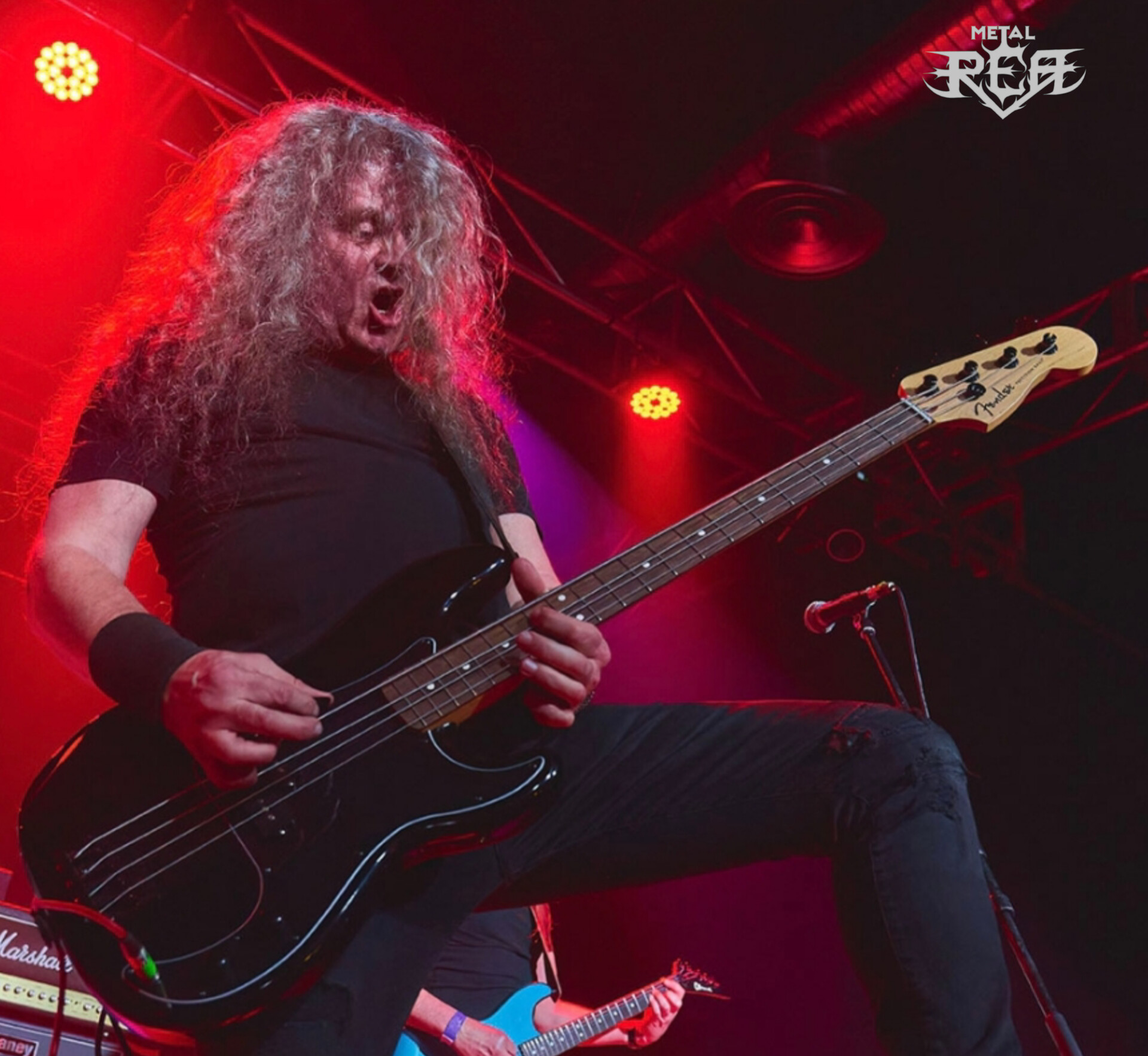
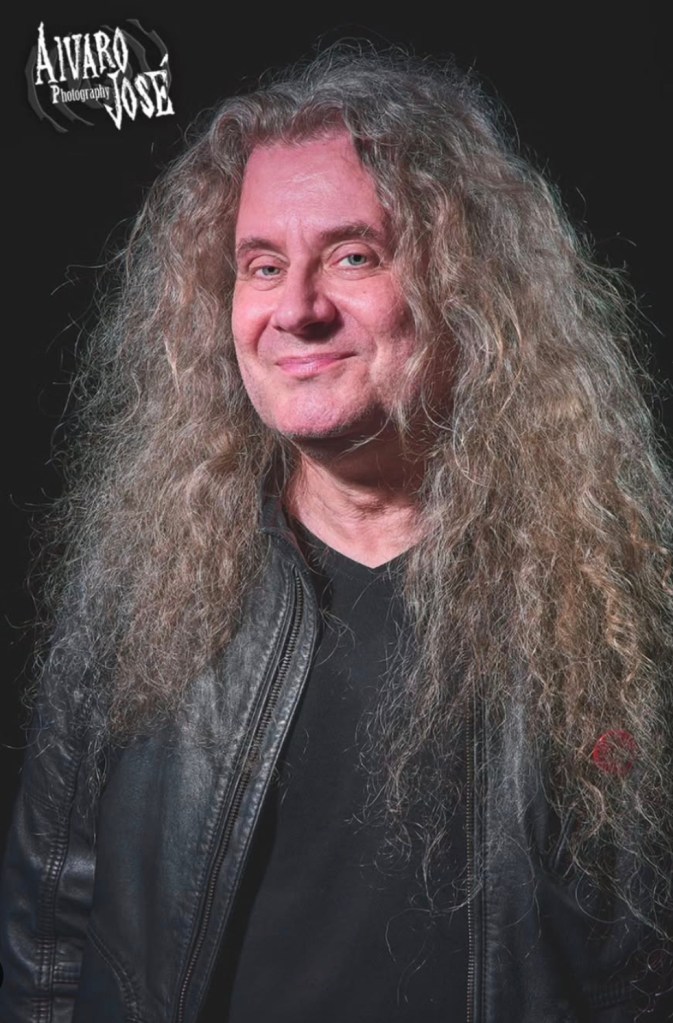
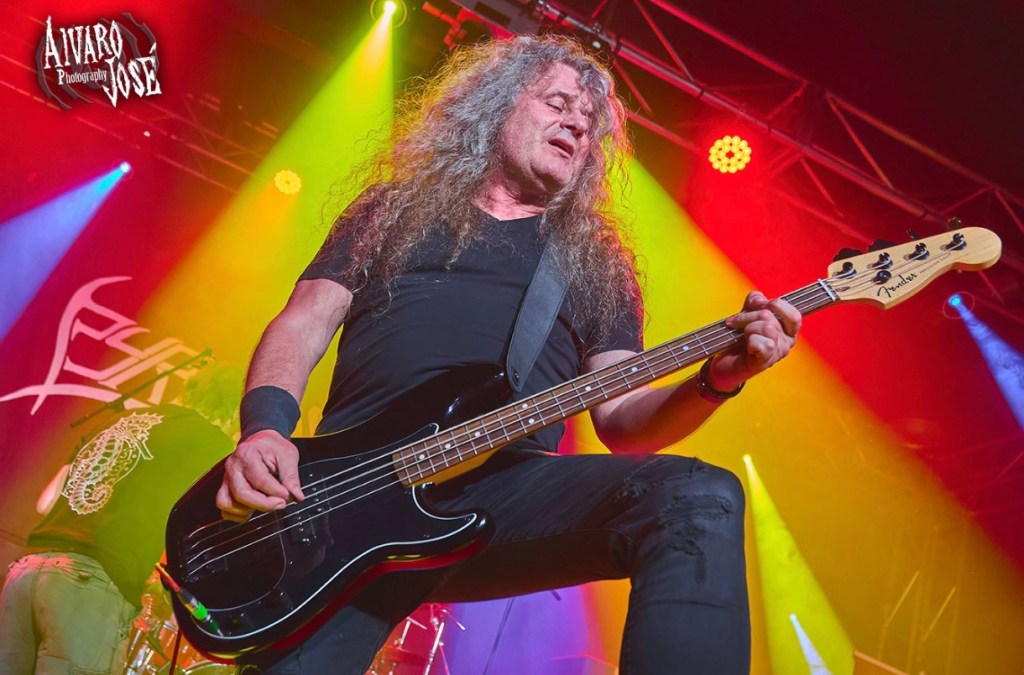
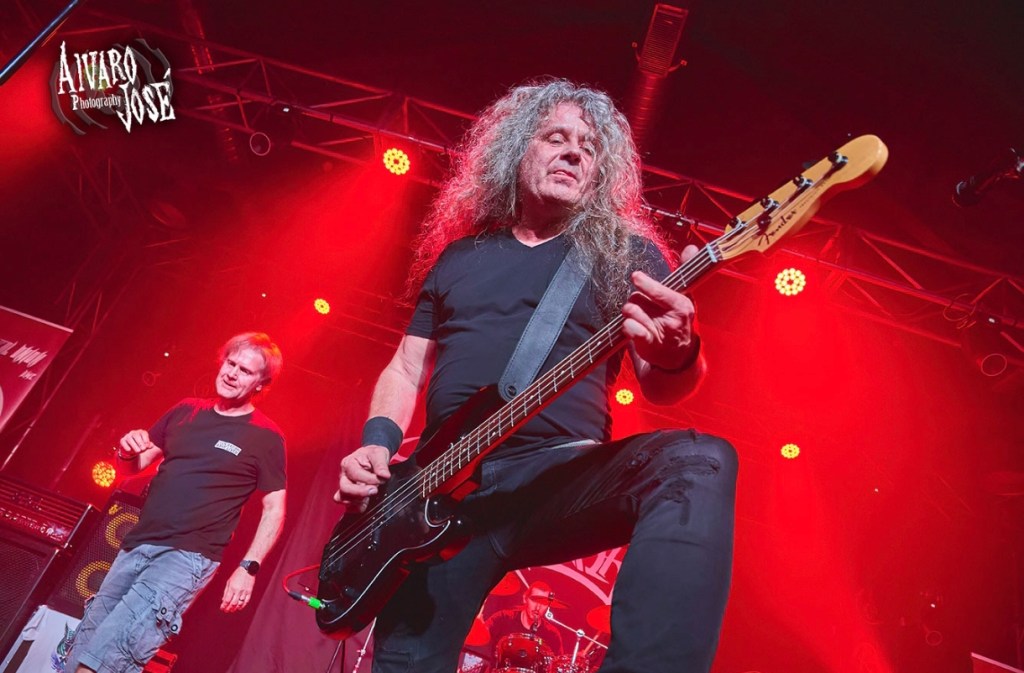
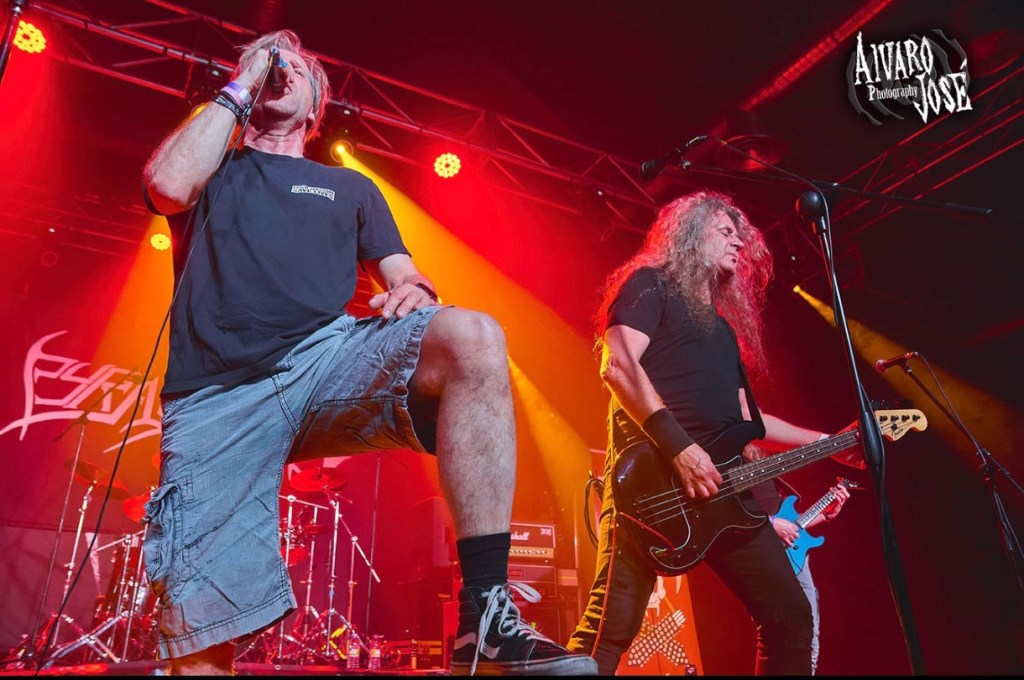
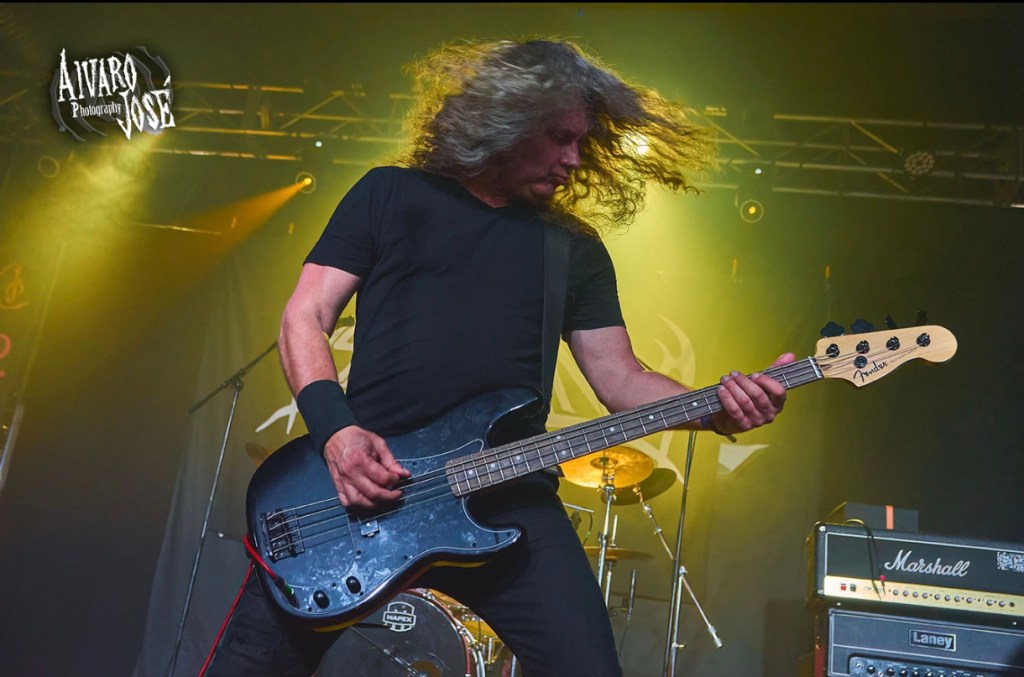
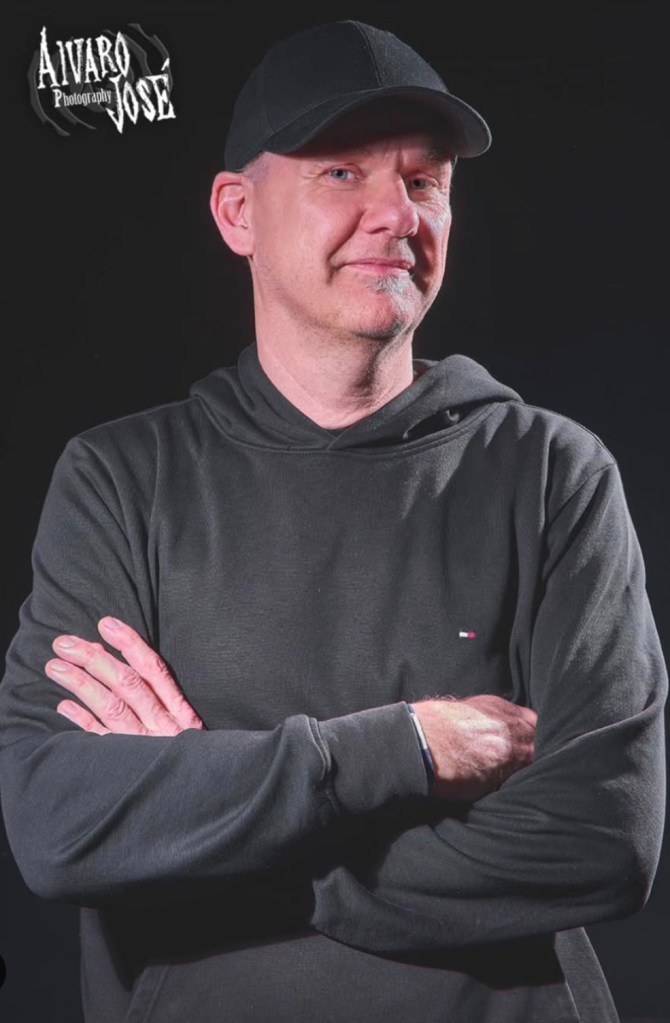
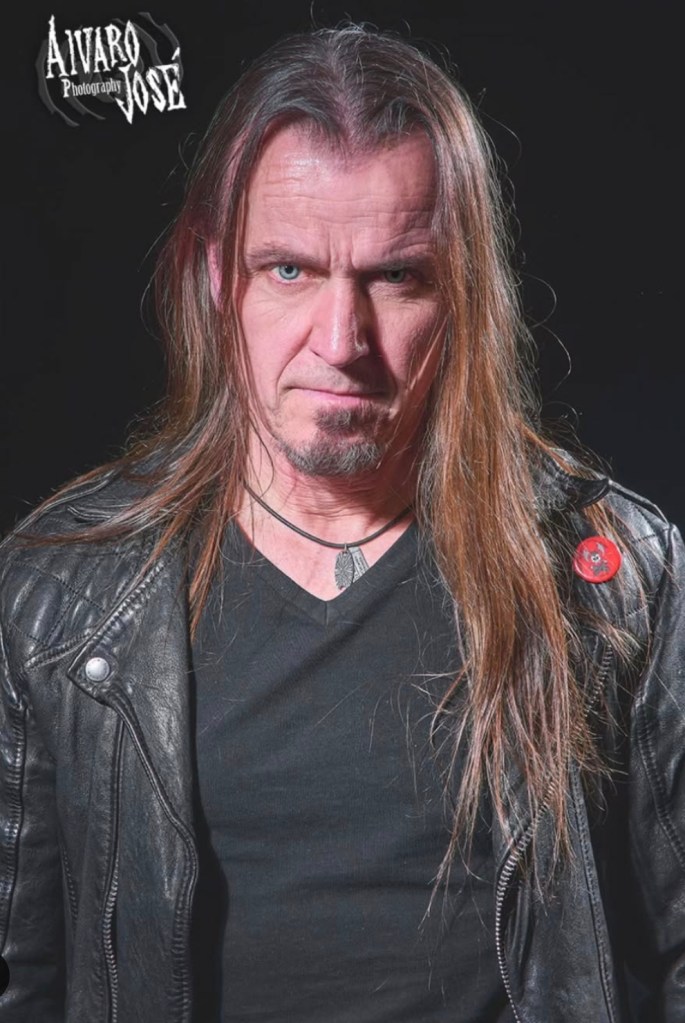
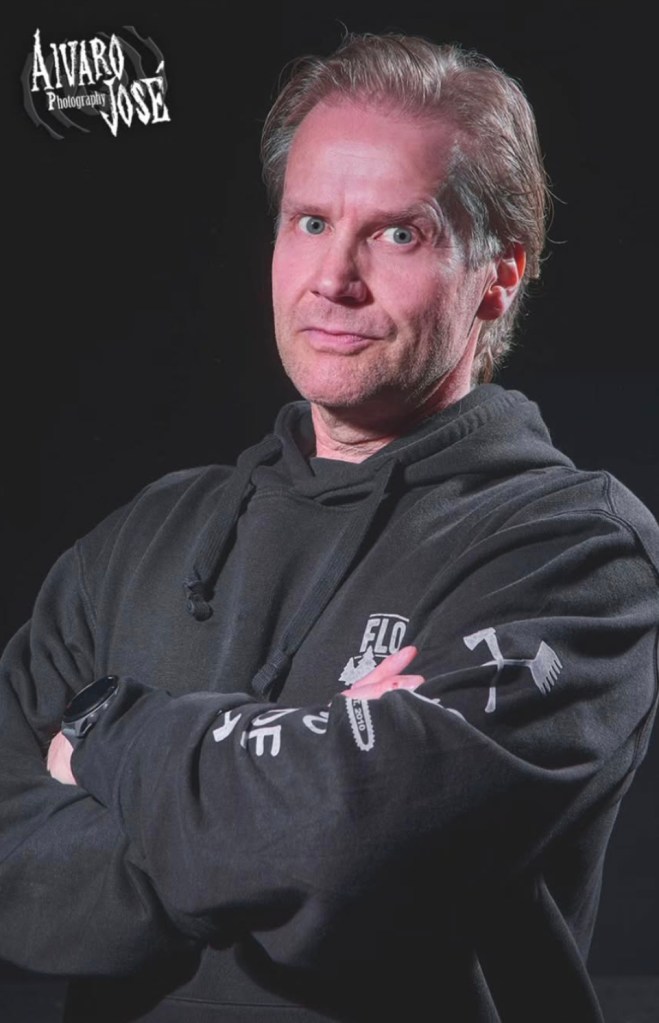
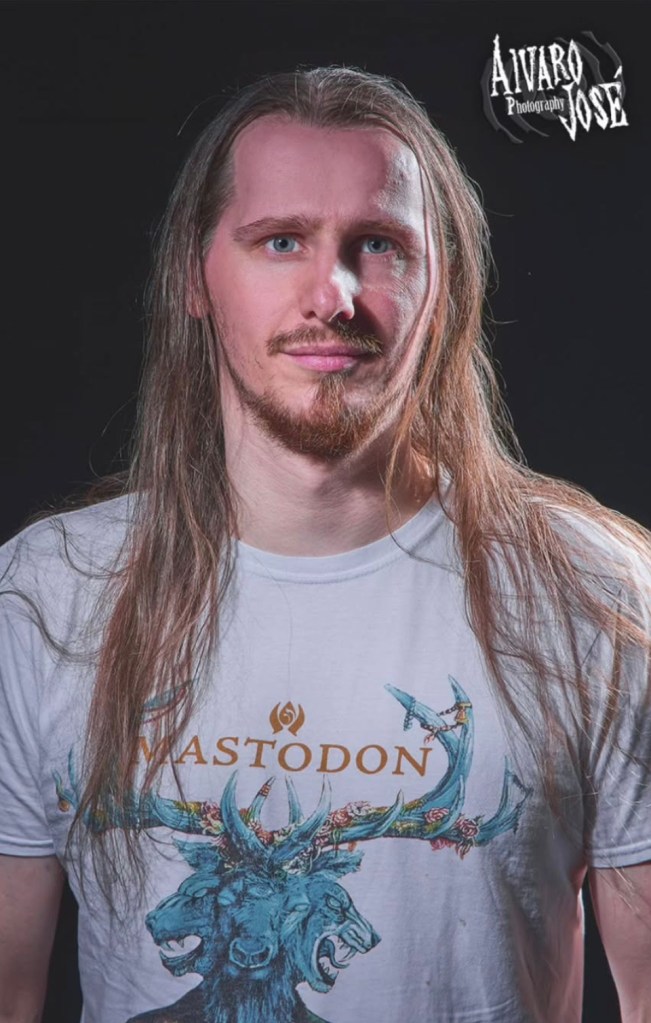
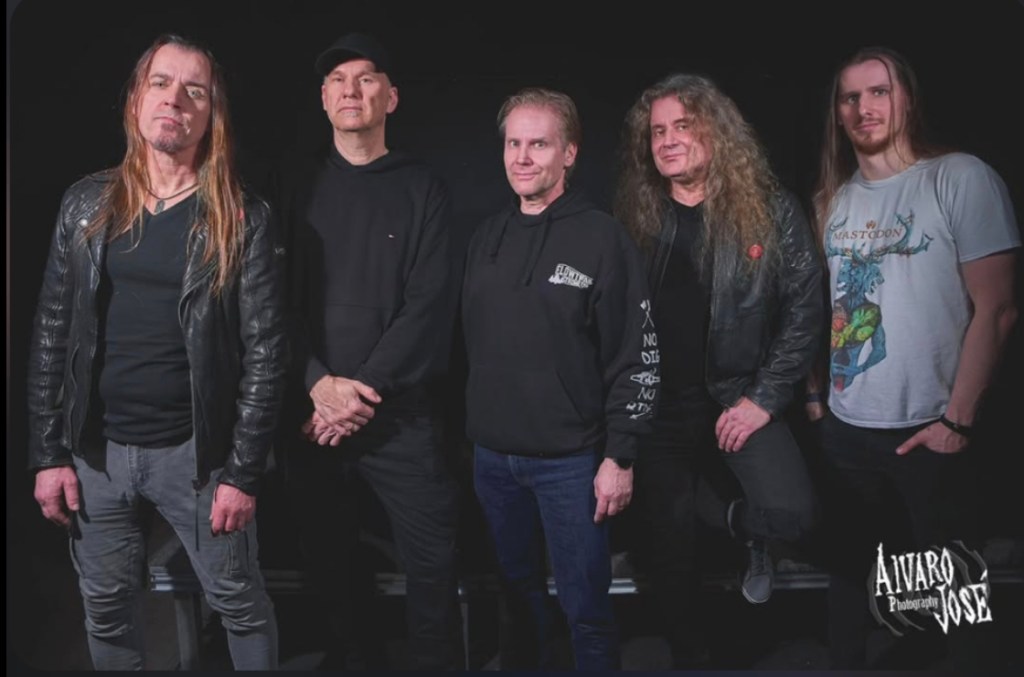
Hay noches que quedan grabadas a fuego en el libro de oro del underground madrileño, y lo que vivimos el pasado 21 de marzo en la sala Revi Live durante la decimoctava edición del Pounding Metal Fest fue una de ellas. Tras casi cuatro décadas de espera, la legendaria formación alemana Pyracanda pisaba por primera vez suelo español y el resultado fue un auténtico asalto sónico que nos voló la cabeza a todos los allí presentes (podéis revivir la carnicería en nuestra crónica del festival aquí. Pero lo mejor de este bendito underground no solo ocurre sobre las tablas. Minutos después de bajarse del escenario, exhaustos, felices y empapados en sudor tras haberse vaciado al 200%, tuvimos el enorme privilegio de compartir un rato íntimo con ellos en el backstage. Allí, entre risas, cervezas post-concierto y un goteo constante de fans a los que la banda atendió con una humildad abrumadora, mi colega y gran fotógrafo Álvaro y un servidor pudimos hacer una exclusiva sesión fotográfica y cerrar una entrevista con Dieter (bajo) que hoy da la cara. Acomodaos, abriros una cerveza bien fría y disfrutad de esta charla con una banda que ha demostrado que la auténtica actitud thrasher no entiende de modas ni de paso del tiempo. ¡Larga vida a Pyracanda!
REA – Acabáis de destruir por completo la Sala Revi Live! Ha sido la primera vez que Pyracanda toca en nuestro país en vuestros 39 años de carrera. ¿Cómo sentisteis la energía del público madrileño en esta decimoctava edición del Pounding Metal Fest? ¿Valió la pena la espera?
DIETER – Ya sabíamos que había muchos fans acérrimos de Pyracanda en España. Llevamos años recibiendo un feedback buenísimo desde allí, y el sello discográfico nos lo había confirmado. Nos pidieron tocar «Welcome to Crablouse City», del álbum Two Sides of a Coin. Hacía una eternidad que no la tocábamos en directo, pero por supuesto lo hicimos. La reacción fue una absoluta locura. Estamos acostumbrados a que los fans canten los estribillos y se dejen el cuello haciendo headbanging, pero el hecho de que las primeras filas se supieran y cantaran las letras enteras nos dejó de piedra. Un fan me escribió después del concierto: «fue increíble veros por fin sobre un escenario en España. Fue como un sueño hecho realidad». Fans de España, gracias por esta experiencia fantástica. Volveremos.
REA- El cartel de este año ha sido una auténtica oda al underground, compartiendo escenario con leyendas del heavy metal clásico como Wolf y bandas de culto como Blaze. ¿Cómo fue el ambiente en el backstage?
DIETER – Es fácil de explicar. En cuanto terminamos nuestro concierto, nos secamos, nos tomamos algo y fuimos directos a buscarte para la sesión de fotos. El resto del tiempo lo pasamos viendo al resto de bandas. Fue increíble. Pocas veces nos hemos sentido tan cómodos y nos fascinó la selección de bandazas que había. El ambiente en el backstage era super relajado. Todo el mundo era encantador y nadie iba de estrella del rock, algo que a veces sí te encuentras en los camerinos de algunos festivales. Todo fue muy distendido y estuvo sumamente bien organizado.
REA – Pyracanda ha alcanzado el estatus de banda de culto con los años. Durante el Pounding XVIII vimos una mezcla tremenda entre el público con veteranos que vivieron los 80 y chavales jóvenes que ni habían nacido cuando se editó Two Sides of a Coin, matándose en el pit. ¿Qué se siente al ver que vuestra música ha sobrevivido y conquistado a nuevas generaciones tras 30 años de ausencia?
DIETER – Sí, la verdad es que ni nosotros mismos podemos explicarlo. Parece que esta música tiene algo diferente. Durante el tiempo que la banda estuvo inactiva, la gente nos preguntaba por ella muy a menudo. Hubo un chico de Asia que se encargaba del merchandising y que insistió muchísimo en imprimir el logo de Two Sides of a Coin en camisetas de manga larga; le dejamos porque nos lo pidió muy amablemente. Luego, nuestro segundo sello discográfico de aquella época nos preguntó si podían reeditar Thorns en Rusia y Ucrania; dijimos que claro, que era un detalle que se acordaran de nosotros. Y después llegó Divebomb Records desde Estados Unidos preguntando si podían reeditar Two Sides of a Coin totalmente remasterizado, incluyendo una entrevista y demás. Esa fue la primera vez que pensamos: «¿qué está pasando aquí?». Una cosa llevó a la otra y, cuando la banda se reunió en 2019 tras ese parón que parecía eterno y las revistas se hicieron eco, empezaron a llovernos ofertas de sellos de inmediato. No nos lo explicamos, pero lo disfrutamos.
REA – Ofrecisteis un repaso maestro a vuestra discografía, pero tenemos que hablar de Losing Faith (2024). Regresar con un nuevo álbum de estudio tras 30 años de silencio es un hito enorme. ¿Cómo se siente al tocar estos nuevos temas en directo, como «Spoke in the Wheel», y ver que encajan tan perfectamente con los viejos clásicos?
DIETER – Sí, las canciones nuevas encajan muy bien con las de los 90, pero aun así se nota que son nuevas, y eso es algo bueno. Por supuesto, el álbum Thorns es diferente a Two Sides of a Coin, y Losing Faith vuelve a ser distinto, pero siempre suena a Pyracanda. Hubo una situación muy divertida cuando el disco aún no había salido: Elmar estaba de vacaciones, sentado en el balcón de su habitación de hotel, escuchando la grabación del estudio. Una grabación de un disco que todavía no existía de cara al público. De repente, alguien desde el balcón de al lado gritó: «¡Ey!, ¿eso es lo nuevo de Pyracanda?». Hasta el mismísimo Elmar se quedó sin palabras. Obviamente fue una casualidad tremenda que, de entre toda la gente del hotel, un fan de Pyracanda tuviera la habitación de al lado, pero eso demuestra que hagamos lo que hagamos, la gente lo reconoce como nuestro sonido. Si eso es bueno o malo, ya depende del gusto musical de cada uno (risas).
REA – Viajemos en el tiempo al Koblenz de finales de los 80. Alemania era la capital europea indiscutible del Thrash Metal (Kreator, Sodom, Destruction…). ¿Qué os pasaba por la cabeza cuando decidisteis formar Pyracanda en medio de una escena tan hirviente? ¿Fue difícil encontrar una identidad propia entre tantas bandas agresivas?
DIETER – Yo no estuve ahí desde el primer día. Me uní a la banda justo antes de nuestro primer contrato discográfico, pero no formé parte de la fundación inicial. Para responder a tu pregunta: lógicamente el entorno influye. Por aquel entonces todos formábamos parte de la misma peña de heavy metal en Koblenz, y el metal pegaba muy fuerte. Pero nuestros ídolos no eran necesariamente las bandas alemanas. Había amistad, especialmente con Rage, pero nosotros éramos fans de Metallica, Megadeth, Overkill y Testament. Nos dejamos influenciar por ellos de forma inconsciente y totalmente inocente. Y ese es precisamente el secreto: nunca intentes copiar a nadie ni pienses «esto tiene que sonar como…». Escribe las canciones como te dicte el corazón de la banda. Sé tú mismo. Cualquier otra cosa no funcionará y no te llenará. Y si además les gusta a los fans y a los sellos… pues mira, eso que se llevan (risas). A colación de esto, se me viene a la cabeza algo que dijo James Hetfield en una entrevista reciente: «Tuve mi primera banda a los 15 años y traje un par de canciones. A los demás no les gustaron, así que los eché». A eso me refiero: haz lo tuyo y no intentes ser otra persona.
REA – Mirando atrás a *Two Sides of a Coin* (1990) y *Thorns* (1992), esos álbumes se convirtieron en clásicos de culto absolutos para los thrashers underground de todo el mundo. ¿Qué significan esos dos discos para vosotros a día de hoy?
DIETER – Solo puedo hablar por mí mismo. Two Sides of a Coin es perfecto tal y como es. Estamos muy contentos con él, incluso hoy en día. Con Thorns las opiniones están más divididas. Por mi parte, muchas veces he deseado poder volver a entrar en un estudio para darles una vuelta a los temas con la experiencia que tenemos ahora y volver a grabarlos. Las canciones de ese álbum tienen más potencial del que muestran ahí. Lógicamente es imposible, pero lo he pensado mucho. Por otro lado, hay gente que me dice que estoy completamente equivocado, que Thorns es mejor, más sofisticado y… no sé. Escuchad el álbum y decidnos qué pensáis, al fin y al cabo cada uno tiene sus gustos. En directo tocamos muchos temas del Two Sides of a Coin, y actualmente solo dos del Thorns: «The Dragons Cult» y «Two Sides of a Coin». Y sí, la canción «Two Sides of a Coin» no está en el álbum Two Sides of a Coin. No os preocupéis, el mundo es un lugar muy raro. De todos modos, estamos felices de que FHM Records no solo haya producido nuestro nuevo trabajo, Losing Faith, sino que también haya reeditado esos dos discos antiguos. Para nosotros, FHM es el mejor sello del mundo. Mandamos un saludo desde aquí a Frank Hirnschal y Lilla Weinsheimer.
REA – Durante el show, Hansi bromeó diciendo que «Democratic Terror» era vuestra «canción de flamenco», lo que hizo reír al público antes de que se volvieran a romper los cuellos. ¿De dónde salió ese chiste? ¿Crees que a veces falta humor en la escena del metal extremo actual?
DIETER – ¡Guau! Escuchaste con muchísima atención. Pero es verdad, el principio de «Democratic Terror» es realmente una secuencia de notas y ritmos flamencos. Si tocas eso en una guitarra clásica, te entran ganas inmediatas de comer paella y beber un buen vino tinto. Por cierto, ya que hablamos de comida, me gustaría dar las gracias una vez más a los fans acérrimos de Pyracanda (vosotros sabéis quiénes sois) por regalarnos salami, jamón y vino tinto para llevarnos a casa. Nos lo comimos todo juntos después de nuestro siguiente ensayo. Estuvo genial y nos acordamos mucho de vosotros, de España y de la gran experiencia que vivimos.
REA – Otro momento cumbre de la noche fue cuando le dedicasteis «Welcome to Crab-Louse City» a los Pounders, ¡que no la tocabais en directo desde 1992! ¿Qué os hizo rescatar este cañonazo específicamente para el concierto de Madrid?
DIETER – Como comentaba antes, los fans nos pidieron este tema. Y cuando nuestros fans nos piden algo que podemos tocar, lo hacemos, cae por su propio peso. Me imagino perfectamente tocando esta canción dentro de poco en el festival de Bulgaria, y se la dedicaremos también a nuestros fans españoles desde allí.
REA – La industria musical ha cambiado drásticamente desde 1990. Tras volver a la vida como banda, ¿cuál ha sido el cambio más sorprendente o difícil que habéis notado en cómo funciona la escena del metal hoy en día en comparación con los 90?
DIETER – Es fácil de explicar. Antiguamente, el sello discográfico lo pagaba todo por adelantado: el productor, el estudio, el diseño, el hotel e incluso los gastos de viaje. Hoy en día les entregas el producto final terminado y el sello solo se encarga de la prensa, la impresión y la distribución. Por eso nos hizo tanta ilusión hacer todo el trabajo de Losing Faith con amigos, desde el estudio hasta el vídeo, pasando por el artwork y las fotos. Incluso el sello son amigos. Eso era vital para nosotros: la familia, gente que conocemos y en la que confiamos. Y eso se nota al escuchar el álbum. En los 90 te presentaban a unos tíos aleatorios y tenías que currar con ellos; todavía hoy nos seguimos contando historias rarísimas de aquella época.
REA – Os entregasteis al 200% sobre el escenario; a mitad del concierto os veíais físicamente exhaustos pero nunca dejasteis de sonreír y tirar hacia delante. ¿Cuál es el secreto para mantener tan viva esa energía thrasher auténtica de la vieja escuela después de tantas décadas?
DIETER – Mira, nosotros no tenemos ninguna obligación de hacer esto de la música; simplemente queremos hacerlo. Nos encanta. Y, por supuesto, lo damos todo en el escenario porque los fans que están abajo hacen exactamente lo mismo. No existe lo uno sin lo otro. Y ese dolor, ese cansancio… en ese preciso instante, es la sensación más hermosa que puede experimentar un músico.
REA – Estamos viviendo un boom de bandas jóvenes de thrash que visten y suenan exactamente como si fuera 1989. ¿Crees que la escena actual goza de buena salud o se centra demasiado en la estética «retro» y muy poco en escribir buenas canciones?
DIETER – Vaya, lo lamento mucho, porque seguro que podría darte la respuesta más políticamente correcta del mundo y suelta un par de clichés, pero sinceramente no estoy muy al día con las bandas nuevas. Sé que está mal y que debería hacerlo, pero no soy el tipo de persona que se pasa el día y la noche escuchando los últimos lanzamientos y leyendo cada reseña. Culpa mía. Frank y David son muchísimo mejores en eso; a menudo hablan de bandas nuevas y de lo buenísimas que son. Yo les escucho y muchas veces me llevo sorpresas muy gratas. A veces hay bandas jóvenes que me escriben por redes sociales; me encanta escucharlas, darles las gracias y ofrecerles un feedback honesto, pero no voy por ahí buscando a los próximos Megadeth. Que se encarguen otros de eso.
REA – Vosotros sois una banda de directo pura: nada de pistas pregrabadas ni ordenadores en escena. Solo sudor, cerveza y amplificadores. ¿Qué opinas de la tendencia actual donde muchas bandas de metal llevan la mitad de sus conciertos secuenciados desde un portátil?
DIETER – Sí, nosotros preferimos mantener las cosas simples tanto en el escenario como en el estudio. Nada de cajas de ritmos en el estudio ni adornos raros en directo. Pero también es porque nos gusta tener libertad sobre las tablas y no queremos depender de las máquinas. Aun así, entiendo perfectamente a las bandas que trabajan con esas herramientas. Para muchos forma parte del estilo de música que hacen y me parece genial; de hecho, disfruto mucho escuchando ese tipo de música porque en directo suena perfecto. Y bueno, a lo mejor le tengo un pelín de envidia porque ellos saben cómo manejar todo ese equipo correctamente (risas). Ya viste el lío que se armó cuando se rompió el cable de mi transmisor… ¿Te imaginas a mí al lado de un ordenador intentando controlarlo? Necesitaría a un equipo entero de ingenieros técnicos a mi lado (vuelve a reír).
REA – Las letras del Thrash Metal siempre han sido una herramienta brutal para explorar problemas sociales, política y batallas personales. En un mundo moderno que parece más loco que nunca, ¿qué mueve las letras y la rabia que esconde vuestro último álbum, Losing Faith?
DIETER – Hansi es un letrista muy crítico; es muy crítico consigo mismo y muy crítico con todos los idiotas que hay ahí fuera. Y eso es fantástico, especialmente en Losing Faith, que tiene una fuerte carga de crítica social. El propio título del álbum ya marca el tono: habla de la pérdida de confianza en las personas, los sistemas y los valores, y de la tremenda decepción palpable. Especialmente en el mundo de hoy, marcado por la manipulación, la duda, el miedo y una sensación de desorientación donde el individuo pierde el norte en medio del caos. Quizás esa no sea la intención inicial de Hansi, pero es impactante lo bien que encajan nuestras estructuras musicales —que a veces son complejas— con las letras y con pasajes específicos que reflejan el torbellino interno de la humanidad actual.
REA – Más allá de la música y el escenario, ¿qué es lo que más habéis disfrutado de vuestra primera visita a España? La comida, el clima, las cervezas post-concierto con los fans…
DIETER – En primer lugar, nos lo pasamos en grande con nosotros mismos. Nos caemos genial y disfrutamos mucho estando juntos, nos reímos una barbaridad y hacemos todo tipo de tonterías. Es maravilloso. Hubo muchos factores que hicieron que este concierto fuera especial. Empezando por los fans, que como ya he dicho, estuvieron sensacionales. Siguiendo por la organización, que fue increíblemente profesional desde la recogida en el aeropuerto, la elección del hotel, la sala, hasta el catering. El técnico de sonido también estuvo genial a los mandos de la mesa de mezclas. Nunca nos había pasado que el técnico viniera a hablar con nosotros antes del show para preguntarnos tranquilamente qué era lo importante para nuestro sonido; muchos técnicos te ven por primera vez cuando subes al escenario y hacen lo que les parece, sin preguntar. Y la experiencia contigo también fue genial, Scheitan y con Álvaro que hizo unas fotos buenísimas después del concierto y de verdad te tomaste el tiempo necesario para conocer a la banda. Todo el pack y cada persona que conocimos fue simplemente sensacional. Y lo mejor de todo fue el trabajo previo: vinimos con nuestro nuevo batería, David, pero el billete de avión seguía a nombre de nuestro antiguo batería y hubo que solucionarlo. Tengo que darle mil gracias a Rubén por todo el curro que se pegó antes de nuestra llegada. ¡Impresionante! Como ves, no fue el clima, fue la gente. ¡Gracias a todos!
REA – Ahora que la bestia se ha despertado de nuevo, ¿ha vuelto Pyracanda para quedarse de forma definitiva? ¿Está ya el horno encendido para más giras o incluso otro álbum de estudio en el futuro cercano?
DIETER – Cabe mencionar que nosotros no tocamos tan a menudo como otras bandas. No nos explotamos a conciertos hasta morir; no queremos. Seleccionamos muy bien los eventos en los que tocamos y eso es fundamental para nosotros. A veces a la agencia no le parece tan guay, pero para nosotros esto tiene que seguir siendo algo especial. Aquí quiero mandar un agradecimiento especial a nuestro sensacional booker, Husky, que también es un músico muy conocido. Él sabe lo que nos gusta y que priorizamos la calidad antes que la cantidad.¿Nuevo álbum? Mmm, ya veremos. Es bastante probable que ya tengamos un par de notas preparadas para temas nuevos. ¿Quién sabe? (Risas).
REA – ¿Qué es lo que nunca debe faltar en un concierto de Pyracanda?
DIETER – Tiene que ser divertido para el público y tiene que ser divertido para nosotros. Y calidad; eso es innegociable. Los que conocen nuestras canciones saben por qué. La diversión y la calidad tienen que estar en perfecto equilibrio, si no, no nos quedamos satisfechos. Para todo lo demás, somos bastante fáciles de llevar.
REA – Lleváis mucho tiempo en este negocio. ¿Qué es lo más raro o divertido que os ha pasado jamás en la carretera o durante un concierto?
DIETER – Eso pasó en Budapest, durante una gira por Austria y Hungría hace muchísimo tiempo, poco después de que cayera el Telón de Acero. Al principio no nos daban nada de comer, así que dijimos: «Si no hay comida, no hay concierto» (de hecho, en una conocida revista alemana de heavy metal, la crónica de la gira se tituló «Pyracanda – Hungry in Hungary» [Hambrientos en Hungría]). Al final subimos al escenario y el backline consistía en dos mini amplis Marshall y algo que, tras tomarte 20 cervezas, podías llamar cariñosamente un amplificador de bajo. Para la batería tuvimos que pedirle prestados un par de soportes de platos a un fan que tenía su local de ensayo cerca. A pesar de todo, fue un conciertazo. El público se lo pasó en grande y coreó las canciones, ¡y eso que nuestro álbum ni siquiera se había editado allí todavía! Fue de locos.
REA – ¿Algo más que queráis compartir con los lectores de Rock Entre Amigos, Pounding Metal Union y vuestros nuevos fans españoles?
DIETER – Esperamos volver a veros a todos muy pronto. Estamos planeando un concierto en España para 2027. Vamos a demoler la sala juntos, estamos deseando que llegue el momento. Y tal vez, solo tal vez (risas), nos llevemos desde Alemania una canción de Pyracanda completamente nueva bajo el brazo.
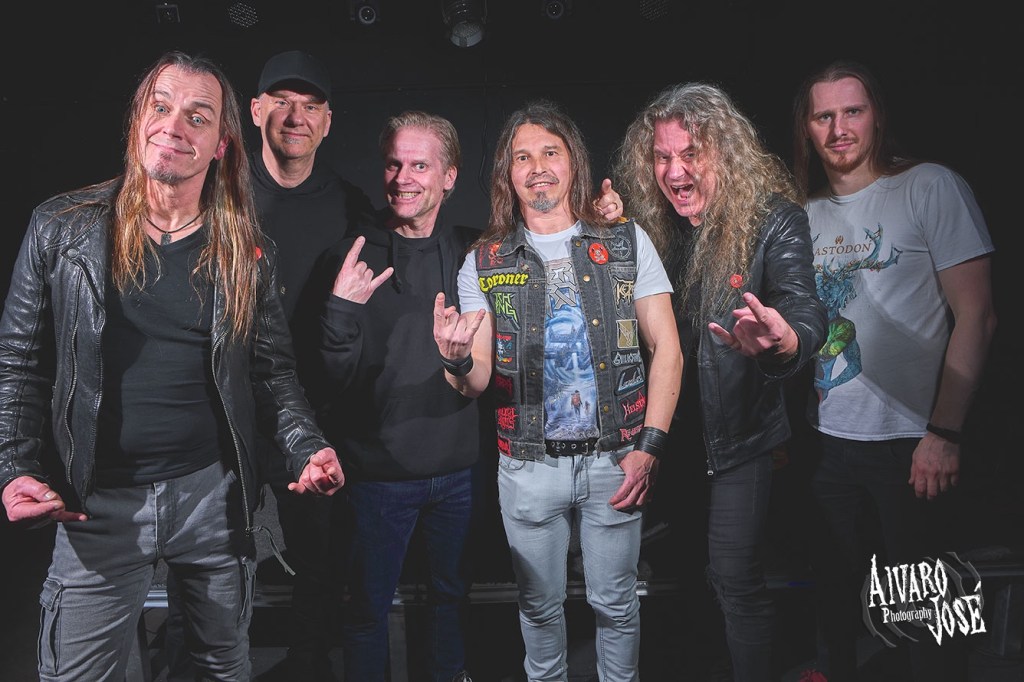
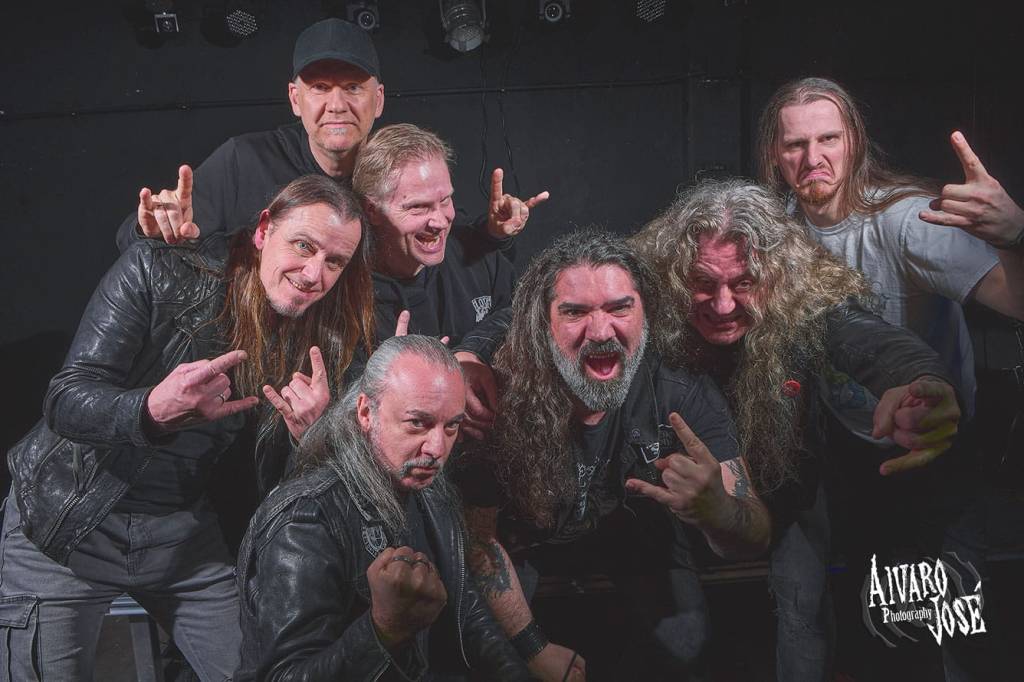
There are nights that are etched in stone in the history books of the Madrid underground, and what we experienced this past March 21st at Sala Revi Live during the eighteenth edition of the Pounding Metal Fest was definitely one of them. After nearly four decades of waiting, the legendary German outfit Pyracanda set foot on Spanish soil for the very first time, and the result was an absolute sonic assault that blew all our minds (you can relive the carnage in our festival review here).But the best part of this beautiful underground scene doesn’t just happen on stage. Just minutes after stepping off the boards—exhausted, happy, and drenched in sweat after giving it their 200%—we had the absolute privilege of sharing an intimate moment with them backstage. There, amidst laughs, post-gig beers, and a steady stream of fans whom the band greeted with overwhelming humility, my colleague and great photographer Álvaro and yours truly got to do an exclusive photo session and lock down an interview with Dieter (bass) who speaks out today. Get comfortable, crack open a cold beer, and enjoy this chat with a band that has proven that true thrash attitude knows nothing about trends or the passing of time. Long live Pyracanda!
REA – You just completely destroyed Sala Revi Live. It was the very first time Pyracanda played in our country in your 39-year career. How did you feel the energy of the Madrid crowd at this eighteenth edition of Pounding Metal Fest? Was it worth the wait? DIETER – We already knew there were a lot of die-hard Pyracanda fans in Spain. We keep getting great feedback from Spain all the years. And the record label has confirmed this trend.For example, there was a request to play “Welcome to Crablouse City” from the Two Sides of a Coin album. We hadn’t played that one live for ages. And of course we did it. The reaction was absolutely insane. We’re used to fans singing along to the choruses and headbanging their hearts out. But the fact that the front rows were singing along to the entire lyrics blew us away.One fan wrote to me after the show: “It felt so unreal to finally see you guys on stage in spain. It was like a dream coming true.”Fans in Spain—thank you for this fantastic experience. We will be back.
REA-This year’s lineup was a true ode to the underground, sharing the stage with classic heavy metal legends like Wolf and cult bands like Blaze. What was the atmosphere like backstage among such devoted, old-school bands? DIETER – It’s easy to explain. After we finished the show, we dried off, had a drink, and then went over to you for the photo session. And we spent the rest of the time “watching the bands.” It was incredible. We’ve rarely felt so comfortable and were fascinated by the selection of great bands. The atmosphere backstage was relaxed. Everyone was nice, and no one was “playing the rock star”. You sometimes see that backstage at festivals. Everything was very laid-back and super well-organized.
Pyracanda has achieved «cult» status over the years. During the Pounding Metal Fest XVIII, we saw a massive mix in the crowd: veterans who lived through the 80s and young kids who weren’t even born when Two Sides of a Coin was released, all killing each other in the mosh pit. How does it feel to see that your music has survived and conquered new generations during your 30-year absence? DIETER – Yeah, we can’t really explain it ourselves. There seems to be something about this music that’s different. During the time the band wasn’t active, we were approached about it so often. There was the merch guy from Asia who really wanted to print the “Two Sides of a Coin” logo on long-sleeved shirts. We let him. He asked nicely, after all. Then there was our second record label from back in the day, which asked us at some point if they could re-release The «Thorns” in Russia and Ukraine. Sure—it’s nice that you’re thinking of us. Go ahead. And then there was Divebomb Records from the US, who asked if they could re-release “Two Sides of a Coin” completely remastered, with an interview included, and so on. That was the first time we thought, oops—what’s going on here? And then one thing led to another. And when the band got reunited in 2019—after that seemingly endless break—and the magazines reported on it, offers from record labels started coming in right away. We can’t explain it ourselves, but we enjoyed it.
REA – You gave a masterful review of your discography, but we have to talk about Losing Faith (2024). Coming back with a new studio album after a 30-year silence is a massive milestone. How does it feel to play these new tracks live, like «Spoke in the Wheel», and see them blend so perfectly with the old classics? DIETER- Yes, the new songs fit well with those from the ’90s, but nevertheless, you can hear that they are new. And that’s a good thing. Of course, the Thorns album is different from the Two Sides of a Coin album, and of course the Losing Faith album is different again. But it’s always Pyracanda. There was a funny situation when the album hadn’t been released yet. Elmar was sitting on the balcony of his hotel room while on vacation, playing the studio recording. A recording of an album that didn’t even exist yet outside there. And suddenly someone from the neighboring balcony called out, “Hey, is that the new Pyracanda?” Even the genius Elmar was speechless. Of course, it was a huge coincidence that a Pyracanda fan, of all people, had the room next to Elmar’s. But that just shows that whatever we do, people recognize it as Pyracanda. Whether that’s a good thing or a bad thing is something everyone has to decide for themselves based on their own musical tastes (laughs).
REA – Let’s travel back to Koblenz in the late 80s. Germany was the absolute European capital of Thrash Metal (Kreator, Sodom, Destruction…). What went through your minds when you decided to form Pyracanda in that boiling scene? Was it difficult to find your own identity among so many aggressive bands? DIETER- I wasn’t there from day one. I joined the band in the time before our first record deal, but I wasn’t part of the band when it was first formed. To answer your question. Of course, the surrounding plays a role. And back then, we were all part of a heavy metal clique in Koblenz. And metal was really big back then. But our idols weren’t necessarily the German bands. There were friendships. Especially the friendship with Rage. But back then, we were fans of Metallica, Megadeth, Overkill, and Testament. We let ourselves be influenced by them. Unconsciously—completely harmless. And that’s exactly the secret. Never try to copy anyone. Or think, “This has to sound like…” Write the songs the way the band’s hearts tell you to. Be yourself. Anything else won’t work. Anything else won’t satisfy you. And if the fans and record labels like it too… then they’re just lucky (laughs loudly).Because it fits so well. It just popped into my head. James Hetfield said in a recent interview: I had my first band when I was 15, and I brought a few songs. The others didn’t like the songs. So I fired them. That’s what I say. Just do your own thing and don’t try to be someone else.
REA- Looking back at Two Sides of a Coin (1990) and Thorns (1992), those albums became absolute cult classics for underground thrashers worldwide. What do those two records mean to you today? DIETER- I can only speak for myself. *Two Sides of a Coin* is perfect just the way it is. We’re very happy with it. Even today.Opinions are divided when it comes to Thorns. For my part, I’ve often wished we could go back into a studio and go over the songs with the experience we have today and re-record them. The songs on the album have more potential than they show there. Of course, that’s not possible. But I’ve thought that a lot.On the other hand, there are people who tell me I’m completely wrong, because Thorns is better and more sophisticated and, … I don’t know. Listen to the album and let us know what you think. Everyone has their own taste, after all. We play a lot of songs from Two Sides of a Coin on stage, and currently only two songs from Thorns: “The Dragons Cult” and “Two Sides of a Coin.” Yes, the song “Two Sides of a Coin” isn’t on the album Two Sides of a Coin. Don’t worry, the world is a funny place. Anyway, we’re really happy that FHM Records not only produced our new album Losing Faith, but also reissued those two older records, Two Sides of a Coin and Thorns. FHM is the best record label in the world for us, anyway. Greetings from here to Frank Hirnschal and Lilla Weinsheimer.
REA- During the show, Hansi joked about «Democratic Terror» being your «flamenco song», which made the crowd laugh before breaking their necks. Where did that joke come from? Do you think humor is sometimes missing in the modern extreme metal scene? DIETER- Wow! You really listened carefully. But that’s right. The beginning of “Democratic Terror” really is a sequence of flamenco notes and rhythms. If you play that on a classical guitar, it immediately makes you hungry for paella and a good red wine.By the way. Since we’re on the subject of food. I’d like to thank the die-hard Pyracanda fans (you know who you are) once again for giving us salami, ham, and red wine to take home. We all enjoyed it together after our next band rehearsal. It was great, and we were thinking of you, spain and all the good experience.
REA- Another huge moment of the night was when you dedicated «Welcome to Crab-Louse City» to the Pounders, mentioning you hadn’t played it live since 1992! What made you dig up this specific cannonball for the Madrid show? DIETER- As mentioned above, our fans asked for this song. And when our fans ask for something we can deliver, we do it. That goes without saying. I can definitely imagine us playing this song soon at the festival in Bulgaria. We’ll dedicate it to you, our Spanish fans, there as well.
REA- The music industry has changed drastically since 1990. After coming back to life as a band, what has been the most surprising or difficult change you’ve noticed in how the metal scene works today compared to the 90s? DIETER- It’s easy to explain. Back in the day, the record label paid for everything upfront: the producer, the studio, the artwork, the hotel, even travel expenses. Today, you hand over a finished product, and the record label only handles pressing, printing, and distribution. That’s why we were all the happier to do all the work for Losing Faith with friends. From the studio to the video, from the artwork to the photos. Even the record label—all friends. That was important to us. Family. People we know, people we trust. And you can hear that on the album. Back in the day, you’d be introduced to some random guys and had to work with them. We still tell each other some of those weird stories even today.
REA- You guys gave 200% on stage; by the middle of the set, you looked physically exhausted but never stopped smiling and pushing forward. What is the secret to keeping that authentic, old-school thrash energy so alive after all these decades? DIETER- You know, we don’t really have to do this music thing. We just want to. We love it. And of course, we give it our all on stage. The fans down there do exactly the same. You can’t have one without the other. And that pain, that exhaustion. In that moment, it’s the most beautiful feeling a musician can have.
REA – We’re seeing a boom of young thrash bands who dress and sound exactly like it’s 1989. Do you think the current scene is healthy, or is there too much focus on «retro» aesthetics and too little on writing actual good songs? DIETER- Oh, I’m really sorry about that. Sure, I could give you the most politically correct answer right now and spout some clichés. But honestly, I don’t really keep up with all new bands myself. I know that sucks and I should be doing it. But I’m not the kind of person who listens to all the latest records day and night and reads every review about every band. Shame on me. Frank and David are way better at that. They often talk about new bands and how awesome they are and stuff. I listen to them, and I’m often positively surprised. Sometimes young bands message me on social media. Then I’m happy to listen to them, thank them, and give honest feedback. But I don’t go looking for the next Megadeth. Let others do that. You are a pure live band: no backing tracks, no computers on stage. Just sweat, beer, and amps.
REA- What do you think of the current trend where many metal bands have half of their concerts sequenced from a laptop? DIETER- Yeah, we prefer to keep it simple on stage and in the studio. No drum machines in the studio, no frills up on stage. But that’s also because we like to have our freedom on stage and don’t want to become too dependent on machines.I do understand the bands that like to work with these things, though. For many, it’s just part of the kind of music they make. I think that’s great. I actually really enjoy listening to that kind of music. Because, of course, it sounds perfect live.And maybe I’m just a little bit jealous that they know how to handle all that stuff properly (laughs heartily). You saw what a hassle it was when the cable from my transmitter broke. Can you imagine me standing next to a computer and having to operate it? In that case, I’d need a whole team of technical experts. (laughs again)
REA- Thrash Metal lyrics have always been a great tool to explore social issues, politics, and personal struggles. In a modern world that seems crazier than ever, what drives the lyrics and the anger behind your new album Losing Faith? DIETER- Hansi is a very critical lyricist. He’s very critical of himself and very critical of all the idiots out there. And that’s a good thing. Especially on the album Losing Faith. It’s very socially critical. The album title alone sets the tone: it’s about the loss of trust in people, systems, and values, and about the palpable disappointment. Especially in today’s world, which is marked by manipulation, doubt, fear, and a sense of disorientation, where individuals lose their footing in a chaotic world.Perhaps that isn’t Hansi’s intention at all. But it’s striking how well our sometimes complex musical structures fit the lyrics and specific passages that reflect the inner turmoil of humanity today.
REA- Beyond the music and the stage, what did you enjoy the most about your first visit to Spain? (The food, the weather, the post-concert beers with the fans…?) DIETER- First of all we are having fun with ourselves first and foremost. We like each other and enjoy being together. We laugh a lot and get up to all sorts of nonsense. It’s great.There were many factors that made this concert special. Let’s start with the fans. I already mentioned it—they were sensational. Let’s move on to the organization. It was incredibly professional. From the airport pickup, the choice of hotel, the venue, to the catering. The FOH was also great—the guy behind the mixing console. We’ve never experienced an FOH coming to us before the show and calmly going over with us what’s important to us. Many FOHs see you on stage for the first time and just do whatever they think is right. They don’t ask beforehand. And the experience with you was also great, Scheitan, and Álvaro take great photos after the show and really took the time to get to know the band. The whole package and everyone we met—simply sensational. And the best part was the work in beforehand. We arrived with our new drummer, David. The plane ticket was still in our old drummer’s name. That was taken care of. I have to give Ruben a big thanks here. All the work he put in beforehand. Awesome!You see, it wasn’t the weather. It was the people. Thank you all!
REA- Now that the beast is awake again, is Pyracanda back for good? Is the oven already fired up for more tours or even another studio album in the near future? DIETER- It might be worth mentioning that we don’t play as often as other bands. We don’t play ourselves to death. We don’t want to. We play selected events, and that’s important to us. Sometimes the agency doesn’t think that’s cool, but it’s supposed to be something special for us, too. Here’s a special shout-out to our sensational booker Husky, who’s a well-known musician himself. He knows what we like and that we focus on quality, not quantity.New Album? Hmm. Let’s see. It’s quite possible that we have already come up with a few notes for new songs. Who knows? (Laughs again)
REA – What should never be missing from a Pyracanda concert? DIETER- It has to be fun for the audience, and it has to be fun for us. And quality. That’s important to us. Those who know our songs know why. Fun and quality have to be in balance. Otherwise, we’re not satisfied. As for the rest, we’re pretty easygoing.
REA- You’ve been in this game for a long time. What is the weirdest or funniest thing that has ever happened to you on the road or at a show? DIETER- That was in Budapest on a tour in Austria and Hungary. A long time ago. It was shortly after the Iron Curtain fell. At first, we didn’t get anything to eat. Then we said, “No food, no concert” (in a well-known German heavy metal magazine, the tour report was titled “Pyracanda – Hungry in Hungary”). Then we went on stage, and the backline consisted of two tiny little Marshall amps and something that, after 20 beers, you could charitably call a bass amp. For the drums, we’d borrowed a couple of cymbal stands beforehand from a fan whose rehearsal room was nearby. But it was a great concert. The crowd had a blast and sang along to the songs, even though our album hadn’t even been released there at this time. That was crazy.
REA- Anything else you’d like to share with the Rock Entre Amigos readers, Pounding Metal Union, and your new Spanish fans? DIETER- We hope to see you all again soon. We’re planning a concert in Spain for 2027. Let’s tear the house down together. We’re looking forward to it.And maybe—just maybe (laughs)—we’ll bring a brand-new Pyracanda song with us from Germany.


